


Table Of Content
Visual advertising holds great power, as 65% of the audience remembers what they see! Advertisements on roads, railways, and metro lines are perfect, with millions of commuters using them to commute daily. Transit advertising puts your brand directly in front of millions of commuters every single day, generating repeated impressions at a fraction of the cost of TV or digital. According to industry research, transit advertising campaigns increase brand recall by 20–40% among commuters, making it one of the highest-performing out-of-home (OOH) advertising channels available in India today.
In this guide, we break down everything- formats, costs, ROI measurement, city-specific insights, and real campaign results- so you can understand exactly why transit advertising belongs in your brand's marketing strategy.
What Is Transit Advertising?
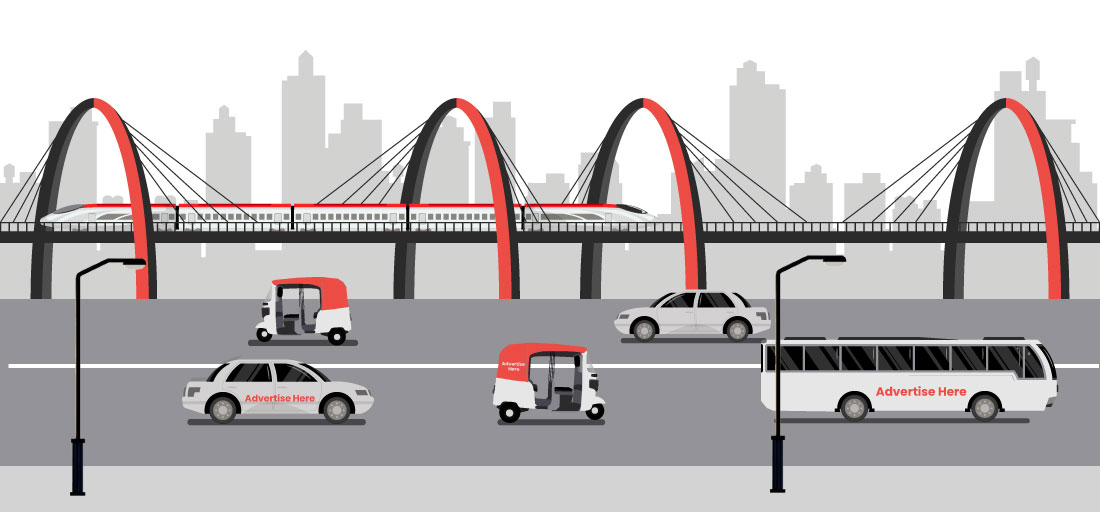
Transit advertising is a form of out-of-home (OOH) advertising that places brand messages on vehicles and transportation infrastructure, including buses, metro trains, auto rickshaws, cabs, railway stations, and airports. Instead of waiting for audiences to come to the ad, transit advertising takes the brand directly to where people already are. The customers are in motion, on the go, and paying attention to their surroundings when your advertisement appears right in front of them. This is the perfect time to get into their brains.
Transit Advertising vs. OOH Advertising: What's the Difference?
OOH advertising is the broader category that includes billboards, street furniture, bus shelters, and transit media. Transit advertising is a subset of OOH; its defining characteristic is mobility. While a billboard is fixed to one location, a branded bus travels through dozens of neighbourhoods, markets, and business districts every day.
Why Transit Advertising Matters for Indian Brands
India's urban landscape is built around transit. In Delhi alone, over 4 million passengers travel on DTC buses daily, with Delhi Metro recording approximately 7 million rides per day. Mumbai's BEST bus network, Bangalore's BMTC, and metro systems in Chennai, Hyderabad, and Pune add tens of millions more daily touchpoints. Brands can reach up to 70% of consumers in major Indian cities through public transportation.
Beyond sheer numbers, transit advertising thrives on repetition. A commuter who rides the same bus route five days a week will see the same brand message 20+ times in a month. That kind of consistent, repeated exposure is exactly what drives brand recall, recognition, and ultimately purchase intent.
Transit media's share of the Indian OOH market has grown from roughly 25% to 35% in recent years. It is projected to hit 40% by 2026, driven by rapid urbanisation, new metro lines, and expanding electric bus fleets under the Smart Cities Mission. For brands looking to grow in India, this is the right channel at the right time.
Types of Transit Advertising in India
Excellent Publicity offers the full spectrum of transit media options across India. Here's a breakdown of each format and where it works best.
Bus Advertising
Bus branding is one of the most impactful transit formats available. Whether it's a full exterior wrap, a rear panel, or interior posters, bus ads travel through high-traffic corridors from morning to night. A single wrapped DTC bus in Delhi can generate over 50,000 daily impressions. Interior panels, visible to passengers during their entire journey, work especially well for QR codes, app downloads, and offers that require a few seconds of dwell time.
Best for: FMCG, retail, fintech, education, and healthcare brands targeting mass urban audiences.
Metro Train Advertising
Metro train branding reaches a captive, urban, and largely young demographic. Metro commuters are exposed to ads on train exteriors, station concourses, platform pillars, digital screens, and inside coaches, with dwell times that can exceed 20 minutes per journey. Metro audiences in cities like Delhi, Mumbai, Bangalore, and Hyderabad skew toward working professionals and students, making this format ideal for premium and tech-forward brands.
Best for: D2C brands, tech companies, lifestyle products, and premium FMCG.
Auto Rickshaw Advertising
Auto Rickshaw branding is the most cost-effective transit format in India, and one of the most targeted modes of transport. Auto-rickshaws navigate lanes, markets, residential colonies, and suburban roads that larger vehicles cannot access. With roughly 10 lakh auto-rickshaws on Indian roads, auto advertising delivers hyper-local reach at eye level. Riders spend an average of 15–20 minutes per trip, giving passengers and pedestrians extended exposure to brand creatives.
Best for: Local businesses, neighbourhood retail, regional brands, Tier-2 and Tier-3 city campaigns.
Cab or Taxi Branding
Cab branding combines urban reach with premium audience targeting. Ride-hailing vehicles carry passengers to offices, airports, malls, and business districts. These are exactly the areas where high-income consumers make purchase decisions. Exterior wraps and in-car digital screens allow for both mass visibility and captive interior engagement during rides that average 20–30 minutes.
Best for: Finance, luxury goods, business services, travel and hospitality.
Mobile Van Branding
Mobile van branding turns a branded vehicle into a fully customisable, event-driven campaign tool. Vans can be deployed around product launches, festivals, sporting events, or competitor locations. This format is ideal for short, high-impact bursts of visibility and works particularly well when combined with on-ground activations.
Best for: Product launches, event marketing, and competitive conquest campaigns.
Airport Advertising
Airport transit advertising reaches one of the most valuable audience segments in India: frequent travellers, business executives, and high-net-worth individuals. With India's airports handling record passenger volumes and the government's plan for 400 new airports by 2047, airport advertising is entering a period of significant expansion. eye-catching digital displays in terminals to immersive branding opportunities in walkways and airport lounges, advertisers have multiple touchpoints to connect with travellers throughout their journey.
Best for: Luxury brands, B2B services, financial products, and premium lifestyle.
Key Benefits of Transit Advertising
Visibility is the greatest of all the advantages transit advertising offers. Along with that, here are other benefits of transit advertising:
Massive Urban Reach
No other single advertising medium delivers the geographic spread of transit advertising. In cities like Mumbai and Delhi, a coordinated transit campaign can touch millions of commuters across dozens of routes, neighbourhoods, and demographic groups, all in a single day. Research shows brands can reach up to 70% of consumers in major Indian cities through transit media alone.
Cost Efficiency vs. TV and Digital
Transit advertising delivers a competitive cost-per-thousand-impressions (CPM), making it a high-efficiency channel whether used independently or as part of a broader multi-channel campaign. When layered with digital or TV efforts, transit reinforces brand messaging at the street level, turning passive awareness into active recall.
High Frequency and Repetition
Repetition is the engine of brand recall. A commuter who travels the same metro or bus route five days a week will see the same transit ad 20+ times per month. Industry data confirms that consistent transit exposure can increase brand recognition by up to 40% among regular commuters, a figure that reflects the compounding power of frequency-based advertising.
Targeting Flexibility by Route and City
Transit advertising is not a blunt instrument. Campaigns can be designed to target specific corridors, office zones, college areas, shopping districts, and industrial belts, matching the brand's customer profile with route selection. Auto rickshaw advertising targets neighbourhood-level audiences; cab branding reaches premium urban segments; bus branding saturates city-wide corridors. Transit media combines mass visibility with the ability to target specific audience segments.
How Much Does Transit Advertising Cost in India?
Transit advertising is significantly more affordable than most brands assume. Here's a general cost reference for major formats:
| Format | Approximate Cost Range | Typical Reach |
|---|---|---|
| Auto Rickshaw (fleet of 200) | ₹10,000–₹30,000 | Hyper-local, neighbourhood-level |
| Bus Side / Rear Panel | ₹15,000–₹50,000 per bus | City corridors, 30,000+ impressions/day |
| Full Bus Wrap | ₹50,000–₹1,50,000 per bus | Maximum visibility, all routes |
| Metro Station Branding | ₹50,000–₹5,00,000+ | Urban professionals, high footfall hubs |
| Cab Branding | ₹20,000–₹80,000 | Premium urban zones, business districts |
| Mobile Van Campaign | ₹25,000–₹1,00,000 | Event-specific, geographically flexible |
Tier-1 vs. Tier-2 City Cost Difference
Transit advertising costs in Tier-2 cities (Jaipur, Surat, Indore, Coimbatore) are typically 30–50% lower than equivalent campaigns in Delhi, Mumbai, or Bangalore, while still delivering strong local reach. For brands expanding beyond metros, this makes Tier-2 transit advertising one of the highest-ROI options available.
Contact Excellent Publicity for a custom quote based on your city, format, and campaign duration.
How to Measure ROI from Transit Advertising
Transit advertising has moved beyond "untrackable." Modern campaigns use multiple measurement methods to tie outdoor impressions to business outcomes.
Impression Tracking via GPS
Vehicles equipped with GPS trackers log exact routes, dwell times, and distances covered. This data feeds into impression models that calculate how many people were likely exposed to the ad based on traffic density and time of day.
QR Codes and Promo URLs
Placing a unique QR code or vanity URL on each ad format makes response directly measurable. Scans and URL visits are attributed back to specific vehicles, routes, or cities, giving brands granular data on which placements drove the most engagement.
Brand Lift Surveys
Pre- and post-campaign surveys measuring unaided brand awareness, recall, and purchase intent provide a direct read on the campaign's impact on brand metrics. This is particularly valuable for new product launches or brand repositioning campaigns where the goal is awareness, and not direct response.
Offline-to-Online Signal Monitoring
One of the clearest indicators of transit campaign impact is a measurable spike in branded search volume, website traffic, or app downloads during the campaign flight period. Studies show that OOH advertising, including transit, drives a 46% increase in consumers searching for a brand online after seeing an outdoor ad.
Transit Advertising in Tier-2 and Tier-3 Cities
The conversation about transit advertising in India is too often limited to Delhi and Mumbai. But some of the most cost-effective and impactful campaigns run in India's Tier-2 and Tier-3 cities, where shared mobility like auto-rickshaws and local buses is the dominant mode of transport, digital advertising penetration is lower, and competition for consumer attention is significantly lighter.
In cities like Nashik, Vadodara, Patna, and Bhopal, a well-executed auto-rickshaw campaign can saturate local markets at a fraction of what a metro campaign would cost. For regional brands, FMCG companies, and businesses expanding beyond the top metros, Tier-2 transit advertising offers an outsized opportunity.
Excellent Publicity operates transit advertising campaigns across Tier-1, Tier-2, and Tier-3 cities pan-India, giving brands a single partner for national and regional scale.
Digital Transit Advertising: DOOH and QR Integration
Transit advertising is no longer purely physical. The integration of Digital Out-of-Home (DOOH) formats, digital screens on metro platforms, in stations, and inside vehicles, is transforming how brands engage commuters. DOOH allows for dynamic creative (time-of-day targeting, real-time updates, programmatic buying) in transit environments, and its share of the Indian OOH market is expected to grow from approximately 9% to 15% over the next two to three years.
Even on traditional formats like bus wraps and auto panels, digital integration through QR codes and AR triggers is becoming standard practice. Campaigns that integrate QR codes in transit environments report 1.5–3x higher engagement rates than static-only formats.
As Excellent Publicity continues to evolve its transit media offerings, this offline-to-online bridge is becoming a core component of campaign design for performance-oriented brands.
Successful Transit Advertising Campaign Examples
As you already know about transit advertising concepts, let us learn about the very successful transit advertising campaign examples:
Nike: "Find Your Greatness" Campaign
Nike deployed a campaign across buses and subways featuring inspirational messages and imagery of everyday athletes- not celebrities, not professionals, but regular people pushing their limits. The campaign resonated deeply with daily commuters who saw themselves in the creative. The results were significant: a 32% increase in brand mentions and a 17% rise in follower engagement across Nike's social platforms during the campaign period.
McDonald's McDelivery Scooters
McDonald's turned branded delivery scooters into mobile billboards in urban markets across India, a smart double use of operational assets. Every scooter on the road served simultaneously as a delivery vehicle and a brand impression. The campaign contributed to a 25% increase in brand recall among urban audiences, while simultaneously reinforcing the message of convenience and accessibility that McDelivery is built on.
The Future of Transit Advertising in India
India's transit advertising market is at an inflexion point. The government's infrastructure push- 400 new airports by 2047, over 1,000 km of new metro lines currently under construction, and the rollout of thousands of electric buses in major cities- is creating an entirely new inventory of high-quality transit advertising surfaces.
Three trends will define the next five years:
1. Digitisation of transit environments. DOOH screens are being installed across metro stations, bus terminals, and airport lounges at an accelerating pace.
2. Sustainability-aligned creative. As fleets go electric and Indian consumers become more environmentally conscious, brands that align their transit campaigns with sustainability messaging will earn a perception premium.
3. Measurement parity with digital. GPS tracking, QR integration, and brand lift measurement tools have transformed how transit campaigns are tracked and evaluated. Marketers can now measure reach, frequency, and audience response with the same rigour applied across any channel in their media mix by making transit a fully accountable part of an integrated campaign strategy.
What Many Transit Advertising Articles Get Wrong
Most content on this topic covers transit advertising as a reach-and-frequency play, and stops there. What gets missed is the precision layer: route selection, audience profiling by corridor, timing by day-part, and integration with digital signals. Transit advertising done well is a targeted, measurable, multi-touchpoint strategy that complements every other channel in your media mix. When combined with digital retargeting, reaching the same commuters online who saw your bus or metro ad offline, the impact compounds significantly.
Why Choose Excellent Publicity for Transit Advertising?
Excellent Publicity is India's leading transit advertising agency, with a proven track record of executing campaigns across the full range of transit media, bus branding, metro train branding, cab branding, auto hood branding, and mobile van branding, across Tier-1, Tier-2, and Tier-3 cities pan-India.
Whether you are launching a new product, scaling brand awareness in a new market, or driving measurable leads through outdoor media, Excellent Publicity brings the strategic planning, creative expertise, and measurement infrastructure to deliver results.
Ready to put your brand in motion? Contact Excellent Publicity today and let our transit media specialists design a campaign that drives real brand engagement and real business outcomes.
Transit advertising is a form of out-of-home (OOH) advertising that places brand messages on public and private transport vehicles, buses, metro trains, auto rickshaws, cabs, and at transit hubs like stations and airports.
Costs vary by format and city. Auto rickshaw fleet campaigns can start from ₹10,000, bus panel ads range from ₹15,000–₹50,000 per bus, and metro station branding can range from ₹50,000 to several lakhs, depending on the station and duration. Tier-2 city campaigns typically cost 30–50% less than metro-city equivalents.
Yes, particularly auto rickshaw and bus panel advertising, which offer hyper-local reach at low cost. A neighbourhood business can run a targeted auto fleet campaign around a specific market, colony, or business district for a few weeks and generate measurable foot traffic uplift.
ROI is measured through GPS-based impression tracking, QR code and promo URL conversion data, brand lift surveys, and offline-to-online signals (search traffic spikes, app downloads during campaign periods). Modern transit campaigns use all four in combination to produce full-funnel reporting comparable to digital channels.
OOH (out-of-home) advertising is the broad category that includes billboards, street furniture, and bus shelters. Transit advertising is a subset of OOH defined by mobility; the ad travels with the vehicle rather than staying fixed in one location.
It depends on your target audience. Bus advertising delivers broader geographic coverage across diverse demographics at a lower cost. Metro advertising reaches a more concentrated, urban, higher-income audience with longer dwell times. Most effective campaigns use both buses for city-wide saturation and the metro for premium audience engagement in key hubs.
Yes. QR codes on ad creatives track direct engagement. GPS on vehicles logs route coverage and impressions. Brand search volume and website traffic spikes during campaign periods provide indirect digital signal attribution.
Related Posts
What is (OOH) Out-of-Home Advertising – All You Need to Know
Out-of-Home (OOH) advertising is a powerful offline marketing strategy using billboards, transit ads, and more to boost brand visibility and reach a wider audience.