

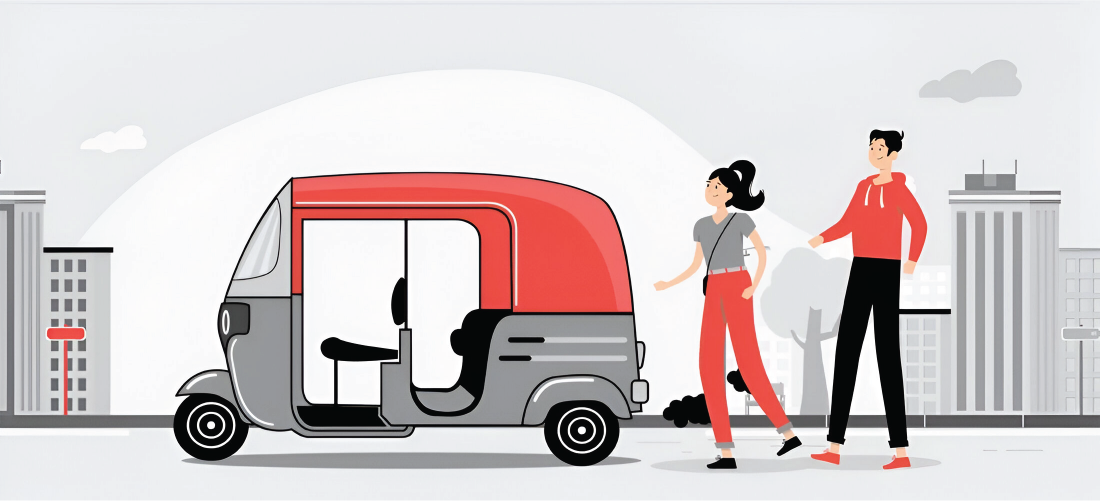

With 15 lakh auto rickshaws navigating the streets every single day, zipping through narrow bylanes, crowded markets, and arterial roads, India is transforming into the next advertising hub of the world. Among so many modes of transport, auto rickshaws are one of the most powerful mediums, as a large population belonging to different financial sectors travels by autos every single day.
Being a transit advertising strategy, auto rickshaws place their message on the exterior or interior, turning every trip the vehicle makes into a brand exposure event. A single branded auto can deliver 5,000 to 15,000 daily impressions in a busy city, at a fraction of the cost of a digital campaign or a static billboard.
For local businesses, D2C brands, FMCG players, and even large enterprises looking to reach hyperlocal audiences, auto rickshaw branding offers an unmatched combination of reach, recall, and ROI. This guide covers everything you need to know, from the different branding formats and real pricing to campaign strategy and how to measure results.
What is Auto Rickshaw Branding?
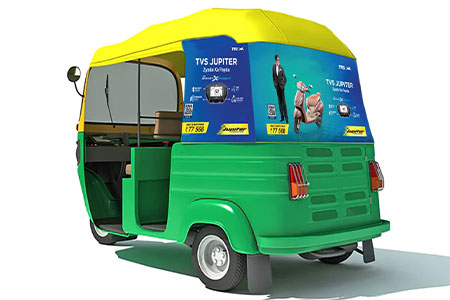
Auto rickshaw branding is a form of mobile outdoor advertising where banners, vinyl wraps, stickers, and flex prints are applied to various parts of an auto rickshaw to display brand messages as the vehicle moves through the city.
The biggest advantage of auto rickshaw advertising is that it takes your brand directly to your audience, across residential colonies, commercial hubs, traffic signals, railway stations, and even narrow lanes.
The success of an auto rickshaw branding campaign depends on three key factors: creative quality (a bold, eye-catching, and readable design), placement (where the advertisement is displayed on the auto), and network size (the number of autos carrying the campaign and the routes they cover).
For effective auto rickshaw branding, the message should be short, crisp, and easy to understand. Equally important are the placement of the advertisement and how clearly it is presented. When your campaign combines a clear strategy, original creativity, and the right execution, it delivers excellent results.
Types of Auto Rickshaw Branding: Which Format is Right for You?
Auto rickshaw branding also has a few types. Let us learn about them to understand which format is right for you:
Auto Back Ads
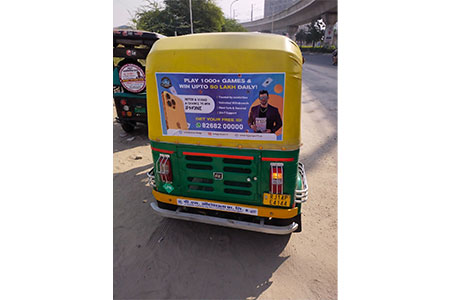
Back ads are placed on the rear panel of the auto rickshaw. The back is the most commonly used and most affordable format. Drivers behind the wheel, pedestrians, and passengers at traffic signals all see these ads clearly.
Best for: Brand awareness, short punchy messages, small budgets
Visibility: High, especially at traffic signals and slow-moving streets
Cost range: ₹200–₹500 per vehicle per month
Ideal for: Retail, local services, app launches, new product launches
Auto Hood Ads (Full Cover Branding)
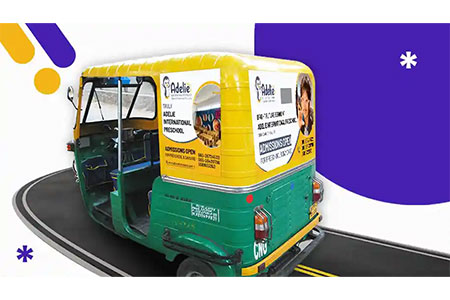
Hood ads cover the entire fabric roof of the auto with a custom-printed rexine or vinyl wrap. This is the most visually dominant format, visible from multiple angles, at a distance, and even in poor light conditions.
Best for: Maximum brand impact, product launches, city-wide campaigns
Visibility: Very High, seen from the front, side, and at a distance
Cost range: ₹500–₹900 per vehicle per month
Ideal for: FMCG brands, healthcare, ed-tech, and real estate
Auto hood branding has seen great heights of success over the past few years, particularly among brands that want to dominate visual real estate in Tier-1 and Tier-2 cities simultaneously.
Auto Side Panel Ads
Side panel ads are applied to the left and right body panels of the auto rickshaw. They extend the visible surface area of your campaign, reaching pedestrians walking alongside the vehicle and drivers in adjacent lanes.
Best for: Brands with longer messages, image-heavy creatives, or product photography
Visibility: Medium-High, best in slow-moving, pedestrian-dense areas
Cost range: ₹400–₹700 per vehicle per month
Ideal for: Fashion, consumer electronics, food delivery, lifestyle brands
Inside Auto Ads
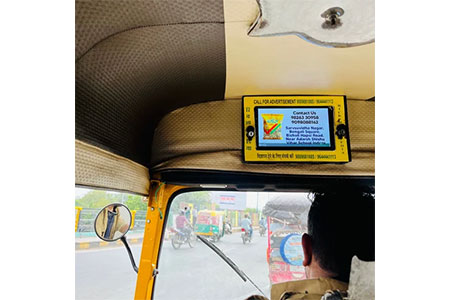
Inside auto ads are placed on the back of the driver's seat, protective shield, or the roof interior, visible exclusively to passengers during their ride.
While reach is lower (only the passenger sees the ad), recall rate is significantly higher because passengers spend 15–20 minutes reading and engaging with the content. This format is ideal for detailed messages, QR codes, promotional offers, and app download prompts.
Best for: High-recall campaigns, QR code activations, fintech, healthcare
Visibility: Low reach, but very high dwell time
Cost range: ₹150–₹400 per vehicle per month
Ideal for: Insurance, loans, health apps, subscription services
5. E-Rickshaw Branding
Electric rickshaws are rapidly replacing conventional autos in many Indian cities, especially in Tier-2 towns, Delhi NCR, and UP. E-rickshaw branding follows the same formats, wraps, stickers, and interior ads, but with the added option of digital screens, QR codes, and NFC-enabled interactive elements.
Brands like Swiggy, Amazon, and Bajaj Auto have already run highly visible e-rickshaw campaigns. Let us look at an example where Swiggy's wrapped e-rickshaw campaign saw a 28% increase in footfall in test cities. Ola's NFC-tap campaign on branded autos generated significant social media buzz.
Best for: Tech-savvy, eco-conscious brand positioning, urban audiences
Visibility: Very High; the novelty factor also drives organic social sharing
Cost range: ₹700–₹1,500+ per vehicle per month
Ideal for: Fintech, food delivery, e-commerce, health & wellness
Major Benefits of Auto Rickshaw Branding
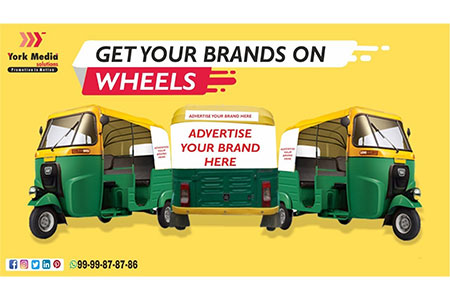
Let us look into the benefits of auto rickshaw branding:
1. Hyperlocal Targeting at Scale
Auto rickshaws operate in defined zones, specific markets, residential areas, railway stations, and commercial corridors. You can choose exactly where your brand message appears, targeting the precise neighbourhoods where your customers live and shop.
2. Unmatched Cost-per-Impression
At ₹400–₹700 per vehicle per month, and a single auto delivering 5,000–15,000 daily views, the cost-per-thousand impressions (CPM) of auto branding is among the lowest of any advertising medium in India.
3. High Recall Value
A 2025 survey found that 74% of consumers remembered products they had seen advertised on auto rickshaws, and many could recall the brand months later. The combination of repeated exposure (the same autos often ply fixed routes) and the novelty of the format drives unusually strong brand recall.
4. Reaches Where Digital Can't
A large portion of India's population, particularly in semi-urban and peri-urban areas, is difficult to cover by digital advertising. Auto rickshaws penetrate narrow lanes, weekly markets, and areas where no billboard can stand and no digital targeting can reach.
5. Long Campaign Lifespan
Vinyl and rexine materials used for auto hood branding typically last 6–12 months with proper care. Unlike digital ads that disappear the moment your budget runs out, a well-executed auto branding campaign continues delivering impressions throughout its lifespan.
6. Adaptable for Every Industry
Auto rickshaw branding has been effectively used across FMCG, retail, ed-tech, real estate, healthcare, fintech, food delivery, and political campaigns. The format works for startups with tight budgets and enterprises running city-wide launches equally well.
7. Dual Benefit for Auto Drivers
Auto drivers receive regular income from advertising agencies for carrying the brand wrap. This incentivises them to keep their vehicles clean and well-maintained, indirectly improving the brand's visual presentation.
8. Complements Digital Campaigns
Adding QR codes, short URLs, or WhatsApp numbers to auto ads creates a bridge between offline and online brand journeys. Brands like Amazon have used QR codes on e-rickshaw interiors to offer exclusive discounts, generating measurable offline-to-online conversions.
Auto Rickshaw Advertising Costs in India
Pricing depends on four variables: city tier, branding format, campaign duration, and number of vehicles. Here is an overview of current market rates:
| Format | Rate Per Vehicle/Month | Notes |
|---|---|---|
| Back Sticker (Small) | ₹200–₹400 | Vinyl pasting; most affordable |
| Back Panel (Large) | ₹400–₹600 | Higher visibility; popular with SMBs |
| Auto Hood / Full Cover | ₹500–₹900 | Rexine fabric; 3–12 months durability |
| Inside Auto | ₹150–₹400 | Seat-back or shield placement |
| Full Wrap (all panels) | ₹1,500–₹2,500 | Maximum coverage; metro cities |
| E-Rickshaw Wrap | ₹700–₹1,500+ | Digital integration available |
Volume discounts: Run a fleet of 50–200 autos to bring down the per-unit rate by 15–25%.
Budgeting tip: For a city-wide brand awareness campaign with meaningful reach, budget for 100–200 autos over 3–6 months. Starting with a 30-day pilot on 25–50 autos is a smart way to validate creative effectiveness before scaling.
How to Launch a Successful Auto Rickshaw Branding Campaign
Let us look into the steps to launch a successful auto rickshaw branding campaign:
Step 1: Define your target geography and audience
Find the locations where your potential customers live, work, and commute. Identify the auto stand clusters and key routes within those zones. The more specific your geography, the better your targeting.
Step 2: Choose the right format for your objective
Brand awareness at scale → Hood or Full Wrap. Detailed messages and conversions → Inside Auto with QR code. Broad pedestrian reach → Back Panel + Side Panels.
Step 3: Design for visibility, not detail
Auto ads are seen from a distance, in motion, and in seconds. Keep your design bold, with a maximum of 3–5 seconds of reading time. Use high-contrast colours, a single clear message, your logo, and one CTA (QR code, phone number, or short URL). Avoid cluttered layouts.
Step 4: Plan your fleet size and duration
A 30-day pilot with 25–50 autos will give you data on creative effectiveness and audience response before you commit to a larger campaign. For steady brand-building, plan for 3–6 months minimum.
Step 5: Work with a verified advertising agency
A reputable advertising agency will handle permissions from local municipal authorities (required in most cities), vendor coordination, installation, and campaign monitoring. They will also provide proof of execution, photographs of installed branding on specific auto numbers and routes.
Measuring the Impact of Auto Rickshaw Branding
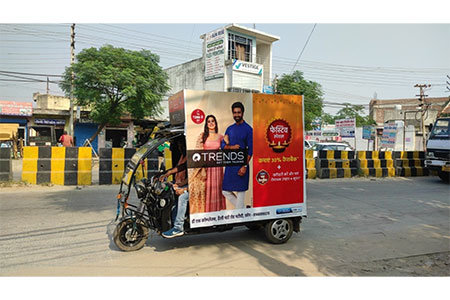
Tracking auto rickshaw advertising requires a combination of direct response and brand metrics:
- QR code scans / URL visits / WhatsApp messages - track exactly how many people took action directly from the ad
- Customer origin surveys - ask new customers how they first heard about your brand; a spike in "auto ad" responses confirms the campaign is working.
- Sales lift analysis - compare sales in campaign zones vs. non-campaign areas before and during the campaign
- Brand recall surveys - run a simple survey in the target area, asking if respondents remember seeing your ad and can identify your brand.
- Impression estimates - multiply the number of autos × daily route coverage (typically 40–80 km/day) × average audience per km.
Auto Branding in Metro Cities: What Works Where
Auto Branding in Mumbai
With over 2 lakh registered rickshaws, Mumbai offers one of the largest transit ad platforms in the country. Areas like Andheri, Dadar, Kurla, Malad, and Bandra are heavily trafficked and great for both B2C and B2B exposure.
Auto Branding in Delhi
Delhi NCR is perfect for government campaigns, education brands, and health tech platforms. Cover Noida, Connaught Place, Lajpat Nagar, and Rohini for strong impressions.
Auto Branding in Bangalore
For tech brands, fintechs, and mobile apps, Bangalore is a sweet spot. Areas like Koramangala, Indiranagar, Whitefield, and Electronic City are loaded with working professionals and college students, ideal for app installations and trial offers.
Auto Branding in Ahmedabad, Pune, Hyderabad
These cities offer low CPMs (cost per thousand impressions) and high user engagement, especially for retail chains, delivery platforms, OTT apps, and hyperlocal services.
Auto Branding Images & Mockups: Visuals That Sell
Creative is king in transit media. Your design must be clean, bold, and CTA-focused. Avoid clutter. Use bright backgrounds, large fonts, clear contact info, and QR codes if applicable.
At Excellent Publicity, we provide:
- 3D mockups before campaign rollout
- High-res campaign photography
- Drone footage (on request) for top-tier clients
- Video reels for use in social media promotions and investor decks
Remember, your campaign is not just seen on roads; it becomes part of your brand storytelling across digital channels.
Auto Branding Campaign Case Studies
Zomato – Bangalore
500 autos with full wraps, targeting lunch hours near tech parks. Used QR codes linking to app download. Result: 22% increase in downloads in those pin codes over 4 weeks.

Government COVID-19 Awareness, Gujarat
2000 autos across 7 cities with multilingual awareness messaging. Included interior flyers with helpline numbers. Campaign monitored by local authorities.
UrbanClap (now Urban Company), Delhi NCR
Used auto hood and side branding. Created Instagram reels showing Your beauty expert is on the move. Boosted local visibility and trended on social for 2 days.
Wrapping Up:
Auto rickshaw branding combines two qualities that most advertising channels cannot offer simultaneously: mass reach and hyperlocal precision. It moves with India's streets, penetrates neighbourhoods, and builds brand familiarity through repeated daily exposure, all at a cost that makes it accessible to businesses of every size.
Whether you're a D2C startup testing a new market, an FMCG brand launching in Tier-2 cities, or a local business building recognition in your own neighbourhood, auto rickshaw advertising deserves a place in your media plan.
Ready to plan a campaign? Explore Excellent Publicity's auto rickshaw advertising options or speak with a media planner to get a custom proposal for your city.
Frequently Asked Questions
Yes, it is one of the most accessible and cost-effective advertising formats for small and medium businesses. Even a budget of ₹20,000–₹50,000 per month can cover a meaningful fleet in a Tier-2 city.
In most cities, brands need approval from local municipal authorities before running campaigns. Rules vary by city and typically cover ad size, content guidelines, and vehicle-specific restrictions. A professional advertising agency will manage this process for you.
Most campaigns run 1–6 months. Short campaigns work for event promotions; 3–6-month campaigns are recommended for brand building and consistent recall. Longer durations also attract better per-unit pricing from vendors.
Yes. You can select autos that primarily operate in specific neighbourhoods, markets, or transit corridors. While demographic targeting isn't as precise as digital advertising, the hyperlocal nature of auto routes provides practical audience focus.
The most common materials are vinyl wraps, rexine fabric (for hood ads), flex banners, and eco-solvent prints. Vinyl wraps offer the sharpest colours and longest lifespan (6–12 months). Flex banners are the most budget-friendly option.
In a busy metro city, a single auto rickshaw can generate 5,000–15,000 daily impressions, depending on the route, time of operation, and traffic density. Using 50–100 autos in a coordinated campaign multiplies this reach substantially.