

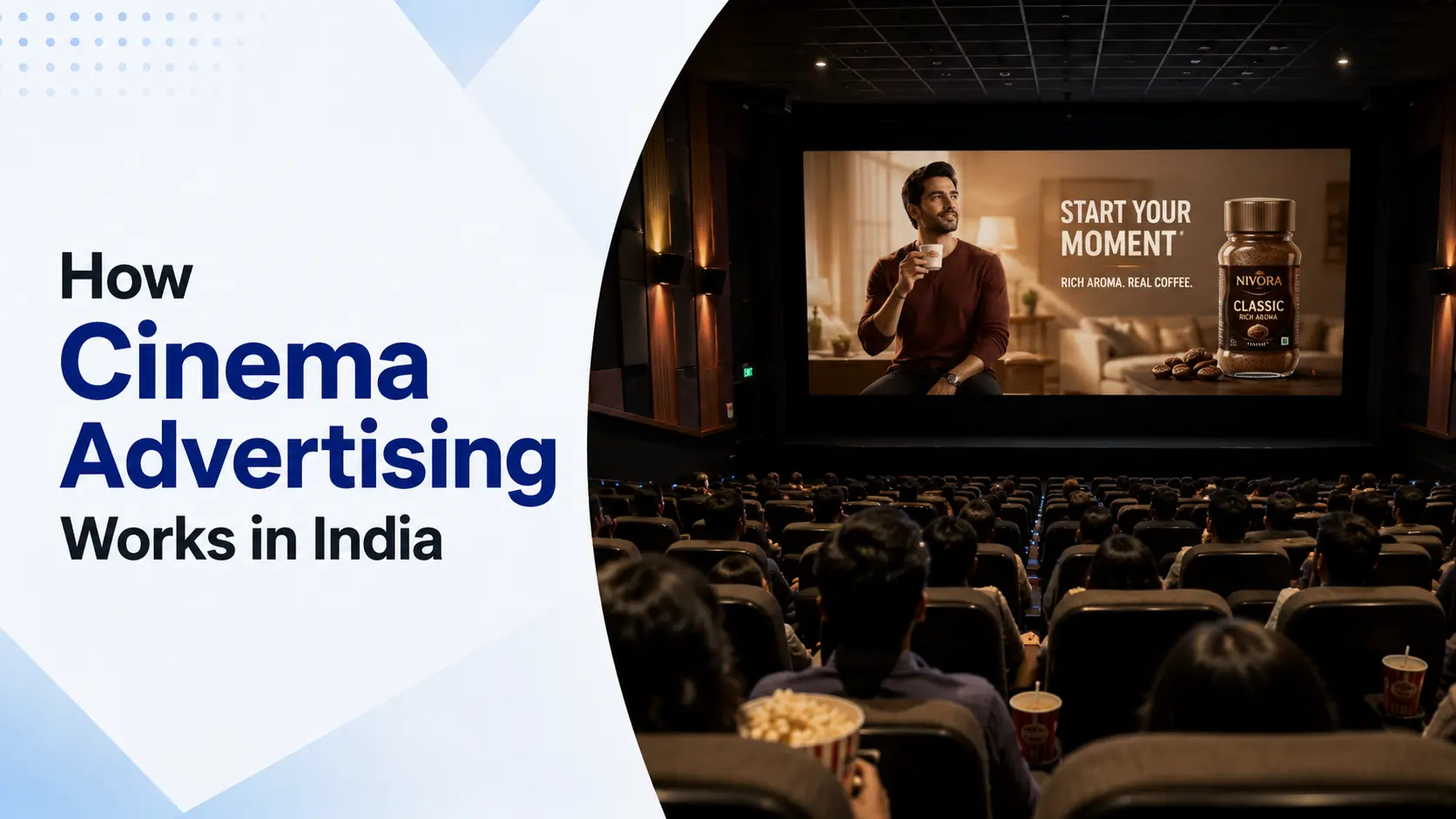

How Cinema Advertising Works in India: Costs, Formats and Booking
Cinema advertising puts your brand in front of a seated, attentive audience that cannot skip the ad, which is why it still holds its own against streaming and social media. There is no single rate card, because cost depends on the chain, the city, the screen count and the release calendar. Here is how the formats, pricing and booking process actually work.
The ad formats available
On-screen slides. Static ads shown before the film, typically the most affordable entry point, often sold per screen per week.
On-screen video. 10 to 30 second video ads, priced per seat or per screen per week, and the rate climbs with prime weekend shows and blockbuster releases.
In-cinema branding. Lobby standees, tent cards and seat-back branding, priced per property, useful for a presence that lasts beyond the trailers.
What decides the cost
- Chain and screen count. A national multiplex chain with wide coverage costs more than a single regional chain, but reaches more cities in one booking.
- City. Metro screens generally cost more than Tier 2 and Tier 3 city screens, reflecting audience size and footfall.
- Timing. A slot around a major release or a festival weekend costs more than a quiet mid-week window, since footfall and attention both peak around big releases.
- Format. Static slides cost the least, video ads more, and in-cinema branding is priced separately again.
Because of this spread, a realistic cinema budget is set after the objective, cities and release window are chosen, not before. An agency with an active buying relationship across chains can also negotiate better positions and value additions that are harder to secure booking directly.
How the booking process works
- Define the objective. A national launch, a regional push or a release-tied campaign each call for a different chain and city mix.
- Choose the chains and cities. Book a single city, a cluster of cities, or a national spread depending on where your audience actually watches films.
- Pick the format. Static, video or in-cinema branding, matched to the goal and the budget.
- Align to a release window. Booking around a strong release lifts the audience your ad reaches, so the release calendar is part of the planning, not an afterthought.
- Submit creative to specification. Cinema screens have fixed technical specs for video and static assets, and material has to be submitted before a hard deadline.
- Confirm the campaign ran. A reliable agency shares proof of play so you have a record of the campaign.
Cinema advertising by city
Rates and screen availability vary significantly by city. For example, Pune cinema advertising and Delhi cinema advertising run on different chain mixes and rate structures, since screen counts, footfall and competing inventory differ by market. Planning city by city, rather than assuming one national rate, is what actually gets a campaign booked at the right price.
Cinema as part of a bigger plan
A cinema campaign works best as part of a wider strategy, not a one-off booking. Brands that have already built visibility through other media convert cinema attention faster, since the audience recognises the brand rather than seeing it for the first time. Our guide on 5 strategies to maximize ROI with an advertising agency covers how to plan cinema alongside your other channels.
Excellent Publicity plans cinema advertising campaigns for clients through offices in Ahmedabad, Pune, Mumbai, Delhi and Dubai.
Frequently asked questions
What formats are available in cinema advertising?
The main formats are on-screen static slides, on-screen video ads of 10 to 30 seconds, and in-cinema branding such as lobby standees, tent cards and seat-back branding. Each suits a different goal, from brand visibility to a deeper in-venue presence.
How much does cinema advertising cost in India?
Cost depends on the chain, the city, the screen count and the slot. A slot around a major release or a festival weekend costs more than a quiet mid-week window, so there is no single fixed rate, only ranges tied to these factors.
How does the booking process work?
You confirm the objective, the cities and chains, the format and size, and the release window you want to align with. The agency then books the screens, submits the creative to specification and confirms the campaign ran as planned.
Is cinema advertising still effective with streaming available?
Yes, for the audience it reaches. Cinema delivers a seated, attentive audience that cannot skip the ad, which streaming and social feeds cannot match, making it strong for launches and high-impact brand moments timed to a release.
Ready to plan a cinema campaign? Get cinema advertising rates from Excellent Publicity for your target cities and release window.