

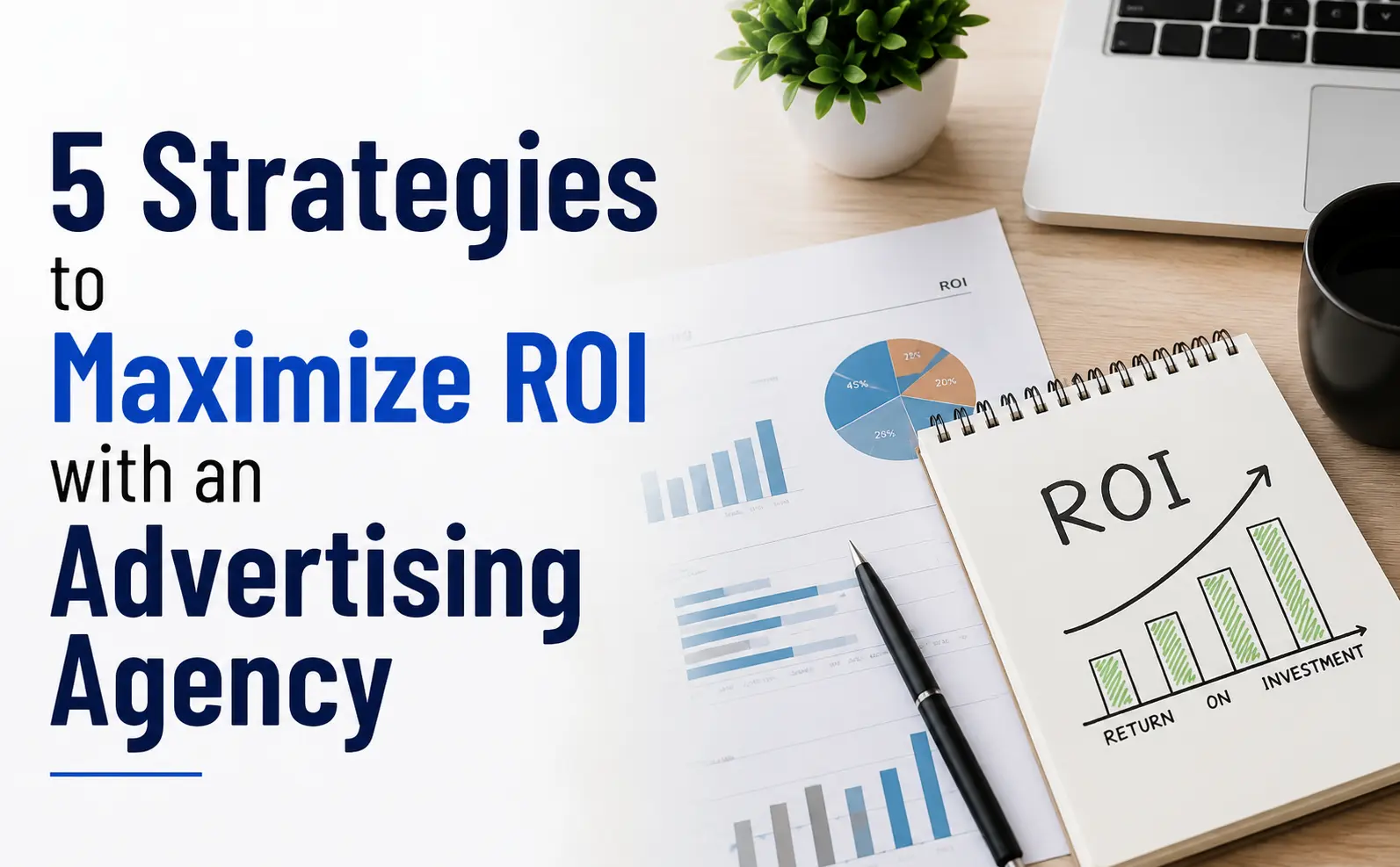

Hiring an advertising agency can create stronger marketing returns when the campaign begins with clear goals and a shared plan. A brand may appear across hoardings, newspapers and digital platforms, but the real value comes from connecting that visibility with enquiries, store visits, sales or another defined business outcome. ROI is therefore shaped by five practical factors: the clarity of the brief, the choice of agency, the media mix, the measurement system and the way the client and agency collaborate. When these elements work together, the same budget can deliver greater value.
Advertising ROI is more than lower costs
When businesses seek better ROI, media efficiency is naturally an important consideration. However, the strongest plan looks beyond cost alone and focuses on the value created by the campaign. A ₹5 lakh campaign may be suitable for one objective, while a ₹10 lakh campaign may be more efficient when it generates stronger demand and measurable business. The useful question is: what business result did each rupee help create? For one company, that result may be qualified leads. For another, it may be store visits, dealer enquiries, app installs, sales or stronger awareness in a new market. Before an advertising company plans for ROI, the business should first define what "return" means for the campaign.
Strategy 1: Set a clear business goal
Many campaign briefs begin like this: "We want to increase awareness." "We want to promote our brand." "We want to be visible everywhere."
These statements are a useful starting point, and they become even stronger when supported by a few details. Awareness among whom? In which city? For what period? What should people remember? What action should they take after seeing the campaign?
A broad brief usually leads to a broad media plan. When the objective is clearly defined, the agency can recommend a more focused mix of channels and the campaign becomes easier to evaluate.
A useful brief is more specific. For example:
- Generate 300 qualified enquiries for a residential project in Ahmedabad over three months.
- Increase weekday footfall at selected retail stores by 15 percent.
- Build awareness for a new product among working professionals in Pune and Bengaluru.
- Reach parents of school-going children before the admission season.
- Drive test-drive bookings for a car launch across four metro cities.
These objectives tell the agency what it is solving. They influence the audience, city, timing, creative approach, media selection and reporting method.
The agency also benefits from understanding the commercial context. Sharing the average order value, sales cycle, priority market, margins, seasonal demand, customer considerations and previous campaign performance helps the team recommend a suitable cost per lead and media approach. The strongest briefs go beyond saying "run advertising for us." They explain the business opportunity, the audience, and the result the business wants to achieve.
Strategy 2: Choose the right agency
Agency pitches often include polished decks, campaign photographs, client logos and ambitious ideas. These are helpful indicators, but the best decision comes from looking at the complete capability of the team. The right advertising agency or ad company is one that understands the business objective, buys the required media well, executes reliably and explains the result clearly. Four questions can make the evaluation easier.
Relevant experience
Category experience helps, but the exact business situation matters just as much. A real-estate launch, a retail footfall campaign, a hospital awareness drive and a national FMCG campaign require different planning. Ask the agency to explain the objective, media logic, execution approach and result of earlier work. Reviewing both the creative output and the campaign outcome gives a more complete picture.
Media access
Some agencies plan campaigns. Others also have strong working relationships with media owners across outdoor, cinema, print, radio, television and digital platforms. That difference affects cost, availability and execution speed. A media advertising agency with active market relationships may be able to identify better sites, negotiate value additions, resolve installation issues faster and secure inventory that is difficult to access directly. This becomes especially important when a campaign runs across several cities.
Clear pricing
An agency may work on a commission, a service fee, a retainer, or a combination of these. Each model can work well when the structure is clear. The client should know what portion of the budget goes towards media, production, agency services, technology, creative work and taxes. This makes ROI calculations more reliable and allows proposals to be compared on overall value, media quality, placement and service support rather than rate alone.
Local execution
Advertising remains a local business in many ways. A site that looks excellent in a spreadsheet may have visibility considerations on the ground. A newspaper edition may perform differently across districts, cinema footfall may vary by day, and radio audiences may respond differently by market. Local knowledge helps the advertising office choose placements and timings more confidently, especially when on-ground execution is involved.
Excellent Publicity, for instance, works across markets through teams in Ahmedabad, Pune, Bengaluru and Dubai. That local presence supports planning and execution while allowing brands to manage multi-city campaigns through one team.
Businesses comparing agencies in a specific market can also review resources such as the top advertising agencies in Pune before creating a shortlist.
Strategy 3: Build one connected media plan
Advertising budgets work best when every media partner follows one connected plan. The digital team may run performance ads, a local partner may handle hoardings, another agency may manage cinema and a separate contact may coordinate print. When these activities share one brief, timeline and message, each channel strengthens the others. A full-service advertising company can improve ROI by planning the customer journey as one campaign rather than as separate media purchases.
That does not mean every campaign needs every medium. It means each medium should have a clear role. Consider a new retail store launch: outdoor advertising may establish local presence and help people remember the location, print can announce the opening offer, radio can build frequency during commute hours, digital advertising can retarget interested users and provide directions, and influencer content can show the store experience.
Individually, these are media options. Together, they can move a customer from awareness to visit.
The right mix depends on the objective, geography, audience behaviour, campaign period and budget. A national brand launch may need broad reach. A local hospital may benefit more from a tightly planned catchment campaign. A premium real-estate project may need fewer but more relevant placements.
A good advertising services agency should therefore explain not only where the brand will advertise, but why each medium is present in the plan. When the role of each medium is clear, the budget becomes easier to prioritise and optimise.
Strategy 4: Plan measurement before launch
Measurement works best when it is planned before the campaign goes live. Setting up phone numbers, landing pages, promo codes, CRM fields, store counters or baseline data at the beginning makes campaign performance easier to understand. Suppose a brand runs outdoor, radio and digital advertising for a new showroom and sales increase at the end of the month. With the right tracking in place, the business can better understand the contribution of digital ads, local visibility, dealer activity, seasonal demand and its existing database. Measurement should therefore begin with the objective.
Campaign objectiveUseful measurementLead generationQualified leads, cost per qualified lead, lead-to-sale ratioOnline salesRevenue, cost per acquisition, ROASStore footfallWalk-ins, location visits, offer redemptionsCalls and enquiriesTracked calls, enquiry quality, cost per enquiryBrand awarenessReach, frequency, brand recall, search upliftApp promotionInstalls, registrations, active users, acquisition costThe next step is to create a baseline. What was the normal weekly footfall before the campaign? How many branded searches did the company receive? What was the average lead volume? What percentage of enquiries converted? A baseline gives the campaign a clear reference point for measuring growth.
Businesses should also separate ROAS from ROI. ROAS looks at the revenue generated against advertising spend. ROI considers the wider economics, including agency fees, production cost and, where relevant, the profit generated from the campaign. A campaign may produce strong revenue while its overall return is shaped by discounts, production and fulfilment costs, so reviewing both measures gives a more accurate view. An experienced advertising firm can help the client decide which numbers matter, how often they should be reviewed and what actions can improve performance. The report should go beyond delivery figures and answer three useful questions: what worked well, what can be improved, and where the next rupee should go.
Strategy 5: Work as one team
The best advertising outcomes come from close collaboration between the client and the agency. The client brings valuable knowledge about the product, customers, business priorities and sales realities, while the agency contributes expertise in media planning, audience strategy, campaign execution and creative communication. When both teams share information openly and review progress regularly, the campaign becomes more focused, responsive and effective. A few simple working habits can make this partnership stronger.
Share business context
Share which products are a priority, which cities matter, what customers usually ask, how the sales journey works and what the team learned from previous campaigns. This information can help the agency refine the media plan and focus the campaign on the most valuable opportunities.
Give timely feedback
Timely approvals help protect media availability, printing schedules, installation dates and launch windows. A clear internal review process allows the client team to assess creative work carefully while keeping the campaign on schedule, particularly around festivals and high-footfall periods.
Review business results
Monthly reviews should connect media performance with sales feedback. Did the campaign generate the right type of enquiry? Did store teams notice a change in footfall? Did one city perform better than another? Did customers mention a specific ad? The sales team often sees patterns that are not visible in a media dashboard.
Consider expert recommendations
A valuable agency partner should also be comfortable recommending an alternative when it can improve the outcome. A requested medium may need to be adjusted for the objective, the budget may perform better with a more focused mix, the campaign period may need refinement, or the audience definition may benefit from greater precision. Clear recommendations help the client make informed decisions and can create more value than a media discount alone.
What better ROI looks like
Maximizing ROI with an advertising agency means making every part of the campaign work with purpose. The brief is clear. The agency is selected for the right capabilities. Every medium has a defined role. Tracking is ready before launch. Reports guide decisions. The client and agency share enough information to improve the plan while the campaign is active. This approach strengthens both campaign performance and the agency relationship.
The conversation then evolves from delivery-focused questions such as "how many hoardings did we get" or "how many impressions were delivered" to more useful business questions: did we reach the right people, how did they respond, what did we learn, and what should we do next.
At this stage, the advertising agency becomes more than a media partner. It becomes a long-term growth partner.
To see how this approach can work across outdoor, cinema, print, radio, television and digital media, explore Excellent Publicity's advertising services. Businesses can also connect with local teams through our advertising agency in Ahmedabad, advertising agency in Pune, advertising agency in Bengaluru and advertising agency in Dubai pages.
Frequently asked questions
What does an advertising agency actually do?
An advertising agency helps a business plan, create, buy, execute and measure advertising across relevant media. Depending on its capabilities, it may manage outdoor advertising, print, cinema, radio, television, digital campaigns, creative work and campaign reporting through one coordinated plan.
How do I measure ROI from an advertising agency?
First define the business objective. Then track the metric linked to that objective, such as qualified leads, sales, store footfall, calls, app installs or brand-search growth. Compare the result with the complete campaign cost, including media, production and agency fees. Digital tools and CRM data can support attribution, while offline campaigns may need tracked phone numbers, QR codes, promo codes, location data or pre- and post-campaign comparisons.
How do I choose the right advertising company?
Review the agency's experience with similar business opportunities, media-buying capability, pricing clarity, execution process, local knowledge and reporting quality. Ask the team to explain the thinking and result behind earlier campaigns so you can assess both its creative approach and business understanding.
Is a full-service advertising agency worth it for a small business?
It can be, especially when the business wants expert planning, stronger media relationships and a single team to coordinate several channels. A full-service agency brings together strategy, media buying, execution and reporting. The engagement is most valuable when the agency's fee is repaid by better planning, saved time, improved rates and stronger campaign outcomes.
Ready to make your advertising budget work harder? Get a quote from Excellent Publicity and build the campaign around a clear business objective.
An advertising agency helps a business plan, create, buy, execute and measure advertising across relevant media. Depending on its capabilities, it may manage outdoor advertising, print, cinema, radio, television, digital campaigns, creative work and campaign reporting through one coordinated plan.
First define the business objective. Then track the metric linked to that objective, such as qualified leads, sales, store footfall, calls, app installs or brand-search growth. Compare the result with the complete campaign cost, including media, production and agency fees. Digital tools and CRM data can support attribution, while offline campaigns may need tracked phone numbers, QR codes, promo codes, location data or pre- and post-campaign comparisons.
Review the agency's experience with similar business opportunities, media-buying capability, pricing clarity, execution process, local knowledge and reporting quality. Ask the team to explain the thinking and result behind earlier campaigns so you can assess both its creative approach and business understanding.
It can be, especially when the business wants expert planning, stronger media relationships and a single team to coordinate several channels. A full-service agency brings together strategy, media buying, execution and reporting. The engagement is most valuable when the agency's fee is repaid by better planning, saved time, improved rates and stronger campaign outcomes.
Related Posts
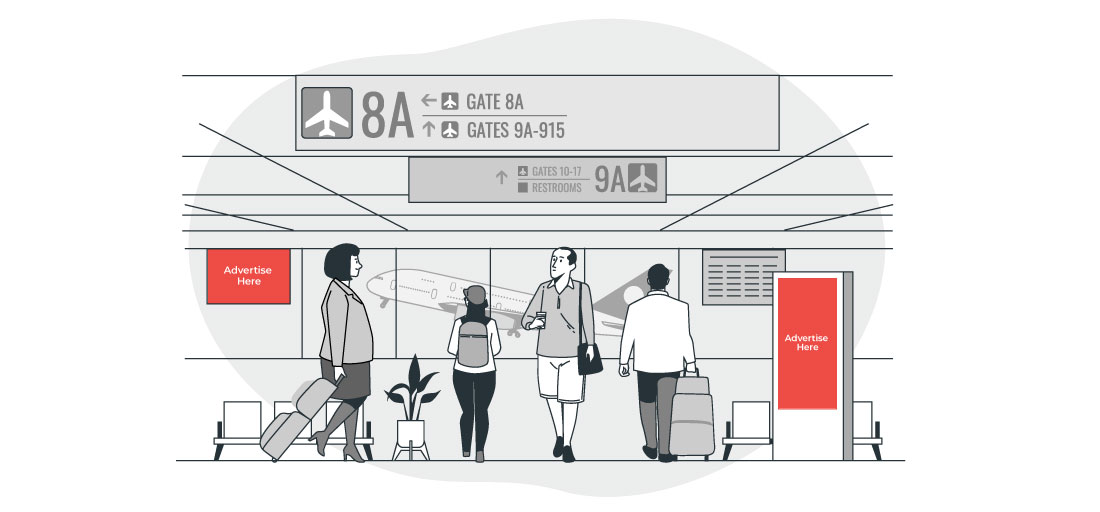
10 Types of Airport Advertising to Maximize Your Reach
Airports are a goldmine for marketers seeking a captive audience with disposable income and a propensity to explore. Imagine a diverse sea of potential customers, all with time to kill while waiting for flights. This is the magic of airport advertising – a chance to leave a lasting impression on a broad demographic that's receptive to new ideas and experiences. But with so many vying for attention, crafting the right strategy is crucial. Here's a breakdown of 10 types of airport advertising options to consider, along with their marketing potential.
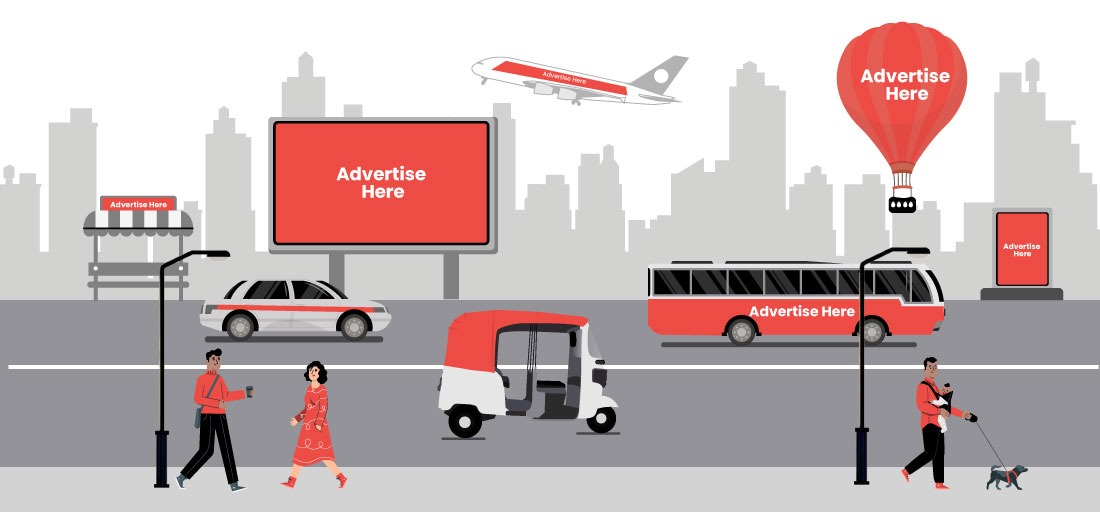
10 Creative Ideas for Outdoor Advertising
Innovative outdoor advertising ideas are essential in today's outdoor advertising market to attract potential clients. For this reason, we have put together a list of ten creative and distinctive outdoor advertising concepts that are sure to motivate you for your upcoming campaign. From eye-catching billboards to interactive installations, the world of outdoor advertising offers limitless creative possibilities.
10 Most Effective Types of OOH Advertising in India
Out-of-Home (OOH) advertising remains one of the most powerful ways to connect with mass audiences in India. This blog breaks down the 10 most effective OOH ad types—from billboards to transit media—that help brands gain massive reach and recognition.