


BTL Marketing in India: What It Is and How to Plan a Campaign
BTL marketing means targeted, local activity built around a specific audience or location, rather than broad, mass-reach advertising. It covers everything from wall branding to in-store activations to direct sampling. Done well, it puts your brand directly in front of the exact people you want to reach, in the exact place they already are. Here is what it means and how to plan it properly.
What BTL actually means
The term comes from an old media-buying distinction: above the line (ATL) is broad, mass-reach media like television and national print, while below the line (BTL) is targeted activity aimed at a specific audience, location or moment. BTL trades reach for precision, which is exactly why it works well for local businesses and campaigns with a narrow, specific goal.
The formats BTL covers
Wall painting and non-lit boards. Sustained, local visibility in a specific neighbourhood or market, useful for building recall over time in one catchment.
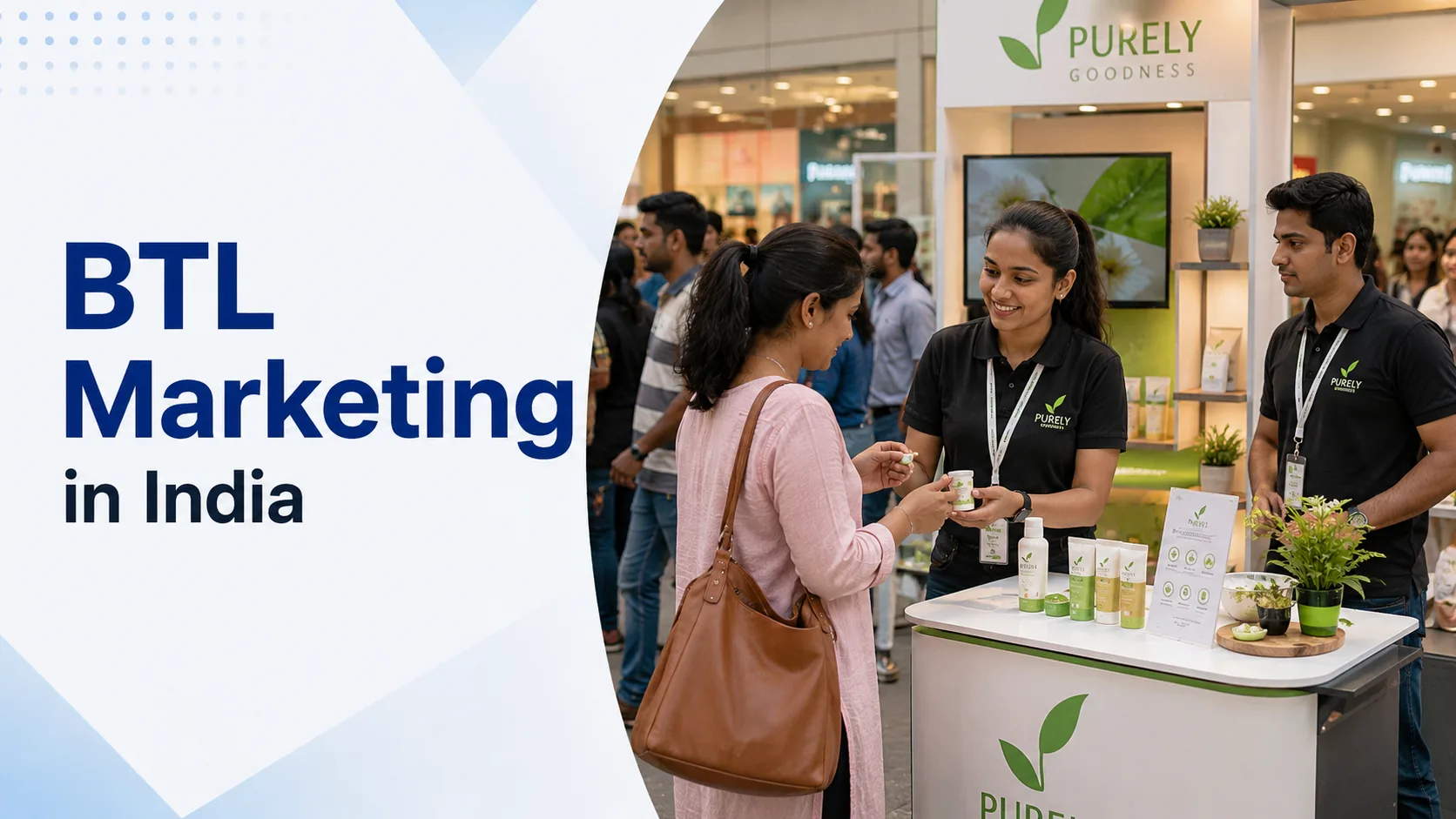
Product sampling. Getting the product directly into a potential customer's hands, one of the most direct ways to drive trial.
In-store activations. Engaging shoppers at the point of purchase, where a decision is often made on the spot.
Roadshows. A mobile activation that moves through a market or a series of locations, useful for reaching multiple pockets of an audience over a campaign period.
Direct engagement events. Face-to-face brand interaction, strong for categories that benefit from explanation or demonstration.
BTL versus ATL
| ATL (above the line) | BTL (below the line) | |
|---|---|---|
| Reach | Broad, mass audience | Targeted, specific audience or location |
| Example media | Television, national print, large outdoor | Wall branding, sampling, activations, roadshows |
| Best for | Brand awareness at scale | Local reach, trial, direct engagement |
| Measurement | Reach and frequency | Engagement, samples distributed, leads generated |
Most effective campaigns use both. ATL builds broad awareness, BTL turns that awareness into local trial and engagement, and the two work better together than either does alone.
How to plan a BTL campaign
- Define the objective. Trial, awareness in a specific area, or direct engagement each point to a different format.
- Define the audience and location. BTL only works when it is genuinely targeted, so be specific about who and where.
- Choose the format. Match the format to the objective: sampling for trial, wall branding for sustained local visibility, activations for engagement.
- Set a realistic timeline. Sustained formats like wall branding need a longer run to build recall; activations and sampling can work as shorter bursts.
- Measure against the objective. Track engagement, samples distributed or leads generated, not just activity delivered.
For example, wall painting advertising in Delhi builds sustained local visibility in a specific market over weeks, a different kind of result from a one-day sampling activation.
BTL as part of a bigger plan
BTL rarely works best in isolation. A brand that people have already seen through broader advertising responds better to a local activation, and the local engagement in turn reinforces the wider campaign. Our guide on 5 strategies to maximize ROI with an advertising agency covers how to plan BTL alongside your other media.
Excellent Publicity plans BTL marketing campaigns for clients through offices in Ahmedabad, Pune, Mumbai, Delhi and Dubai.
Frequently asked questions
What does BTL marketing mean?
BTL, or below the line, marketing refers to targeted, local activities aimed at a specific audience or location, as opposed to broad, mass-reach above the line media like television or national print. It includes activations, wall branding, sampling and direct engagement.
What formats fall under BTL marketing?
Common formats include wall paintings and non-lit boards, product sampling, in-store activations, roadshows, and direct engagement events. The common thread is a targeted, local audience rather than broad national reach.
How is BTL different from ATL advertising?
ATL, above the line, advertising is broad and mass-reach, television, national print, large outdoor. BTL is targeted and local, built around a specific audience, location or moment. Most strong campaigns use both together rather than choosing one over the other.
How do I plan a BTL campaign?
Start with a clear objective and a defined audience or location, then choose the format that fits, sampling for trial, activations for engagement, wall branding for sustained local visibility, and measure it against that objective, not just activity delivered.
Ready to plan a BTL campaign? Talk to Excellent Publicity about the right format for your audience and budget.