


Table Of Content 1
- 1. What is Transit Advertising?
- 2. What Are All the Advertisement Channels in Transit?
- 3. What Are the 7 Types of Advertisements?
- 4. What Are Some Examples of Transit Advertising?
- 5. How Do Transit Advertising Channels Reach Different Audiences?
- 6. What Makes Transit Advertising Effective for Brand Engagement?
- 7. How to Choose the Right Transit Advertising Channel?
- 8. Helpful Resources for Transit Campaign Planning
What is Transit Advertising?
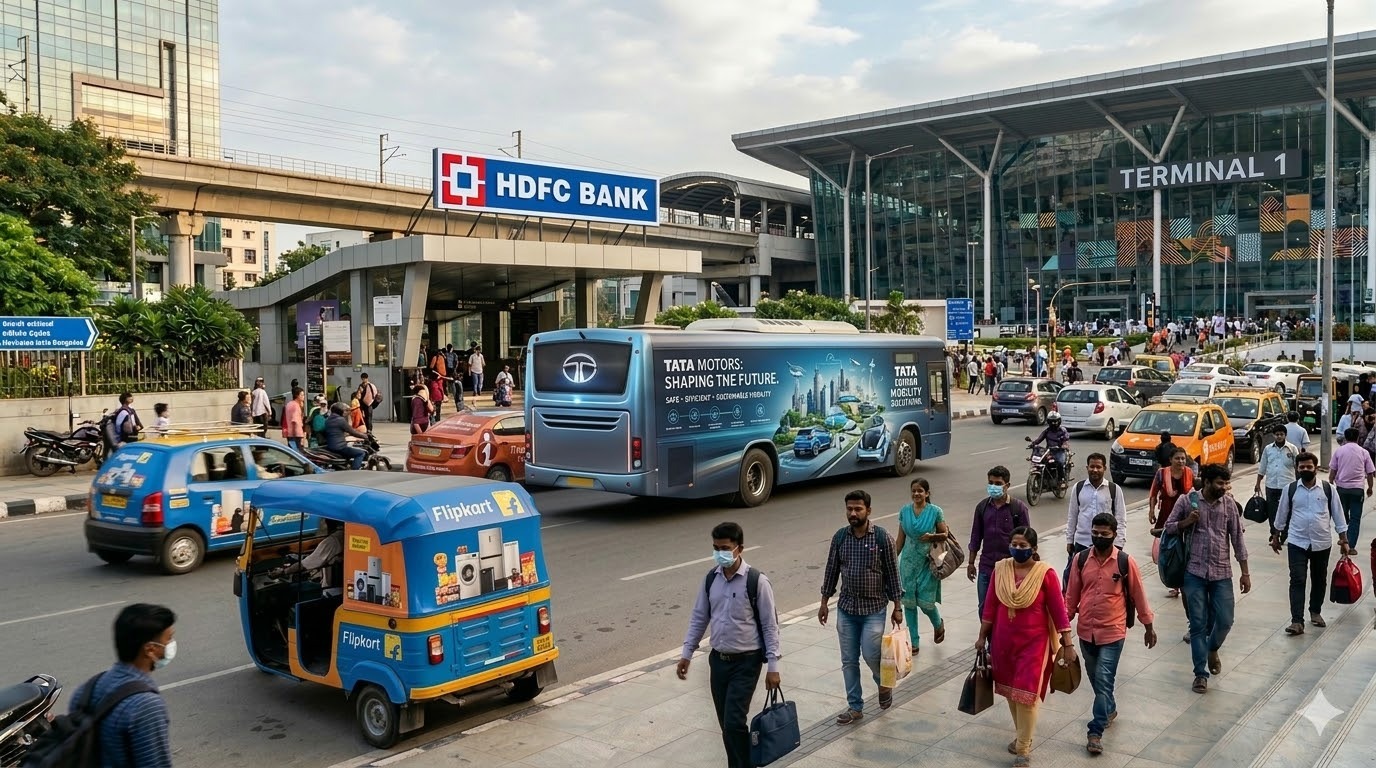
Transit advertising refers to promotional messages placed on or within public transportation vehicles and facilities. This includes everything from bus exterior wraps to digital screens in metro stations. The core principle is reaching consumers while they're traveling from one location to another.
Transit advertising works because it captures people during transition moments when they have time to absorb messaging. A commuter on the Delhi Metro spends an average of 45 minutes per journey, creating extended exposure opportunities that traditional media cannot match.
The medium has evolved significantly with digital integration. Modern transit advertising combines static displays with dynamic content, QR codes for instant engagement, and location-based targeting. Cities like Pune and Hyderabad now feature smart bus stops with real-time information and advertising displays.
Transit advertising differs from other outdoor advertising formats because the audience is captive and the message travels with them. This mobility factor makes transit one of the most cost-effective ways to achieve broad reach across urban markets.
Major Transit Advertising Channels and Their Reach
What Are All the Advertisement Channels in Transit?
Transit advertising encompasses 12 distinct channels, each offering unique advantages for reaching commuters. Bus advertising remains the largest segment, covering exterior wraps, interior cards, and digital displays. Mumbai's BEST buses alone carry 3.2 million passengers daily across 4,608 vehicles.
Metro systems represent the fastest-growing transit advertising channel. Delhi Metro's 285 stations and 348 trains provide multiple touchpoints including platform displays, train wraps, and digital screens. The captive audience spends 15-20 minutes per station visit, ensuring high message retention.
Taxi advertising includes traditional taxi tops, Uber and Ola vehicle branding, and auto-rickshaw displays. This channel offers hyper-local targeting as drivers follow predictable routes through specific neighborhoods and business districts.
Airport advertising targets India's most affluent travelers. Terminal displays, baggage claim areas, and jet bridge advertising reach passengers with higher disposable income. Bangalore's Kempegowda International Airport handles 33.7 million passengers annually, making it a premium advertising venue.
Railway station advertising leverages India's extensive rail network. Major junctions like Mumbai Central, New Delhi, and Chennai Central feature large-format displays, platform advertising, and waiting area promotions. The Indian Railways network serves 23 million passengers daily across 67,956 kilometers of track.
What Are the 7 Types of Advertisements?
The advertising industry recognizes seven fundamental advertisement types, each serving different marketing objectives. Display advertising includes all visual formats from print ads to digital banners. Transit advertising falls primarily under outdoor display advertising but incorporates elements from multiple categories.
Video advertising has become increasingly important in transit environments. Digital screens in metro stations and bus stops now display motion graphics and short video content. Mumbai Metro's digital displays show 15-second video ads that generate 40% higher engagement than static images.
Audio advertising appears in transit through announcements and background music systems. Delhi Metro's station announcements include sponsored messages, while some bus fleets feature audio advertising systems for captive passengers.
Interactive advertising uses QR codes, NFC technology, and mobile integration to drive immediate engagement. Smart bus stops in cities like Ahmedabad feature touch screens where commuters can interact with brand content while waiting for transport.
How to Choose the Right Transit Advertising Channel
Define Your Target Audience
Identify demographics, income levels, and commuting patterns. Airport advertising targets high-income travelers while bus advertising reaches broader demographics.
Analyze Route Coverage
Map your target areas against transit routes. Metro advertising works best for CBD targeting while bus routes cover residential areas more effectively.
Consider Campaign Duration
Short-term campaigns benefit from high-impact formats like taxi tops, while long-term brand building works better with station displays and bus wraps.
Evaluate Budget Allocation
Balance reach and frequency against available budget. Bus advertising offers maximum reach while airport advertising provides premium targeting at higher investment.
Plan Integration Strategy
Coordinate transit advertising with digital campaigns, radio spots, and other media for maximum impact across all consumer touchpoints.
Monitor and Optimize
Track campaign performance through QR code scans, website traffic spikes, and brand recall studies to optimize future transit advertising investments.
What Are Some Examples of Transit Advertising?
Successful transit advertising campaigns demonstrate creativity within the constraints of moving vehicles and busy commuter environments. Coca-Cola's bus wrap campaign in Mumbai featured bottles that appeared to be cooling the entire vehicle, creating a memorable visual that reinforced the product's refreshing qualities.
Amazon's metro station takeover in Bangalore transformed platform walls into a giant product catalog, with each pillar featuring different product categories. Commuters could scan QR codes to add items directly to their shopping carts while waiting for trains.
Zomato's auto-rickshaw campaign in Delhi used the three-wheeler's compact size to create mobile food trucks, with the exterior designed to look like popular dishes. The campaign generated significant social media buzz as people photographed the creative vehicles.
Netflix's airport advertising at Mumbai's Chhatrapati Shivaji International Airport created immersive experiences around popular shows. Baggage claim areas were transformed into show sets, allowing travelers to take photos and share content on social media.
These examples demonstrate how effective transit advertising goes beyond simple brand placement to create memorable experiences that commuters want to engage with and share. The key is understanding each channel's unique characteristics and designing campaigns that work within those parameters.
How Do Transit Advertising Channels Reach Different Audiences?
Each transit advertising channel attracts distinct demographic segments based on transportation preferences and economic factors. Bus advertising reaches the broadest audience across all income levels, with 68% of users being middle-class commuters traveling to work, school, or shopping areas.
Metro advertising skews toward younger, educated professionals. Delhi Metro riders have an average age of 32, with 71% holding college degrees and 45% earning above ₹50,000 monthly. This makes metro stations ideal for technology, financial services, and lifestyle brand campaigns.
Airport advertising targets India's highest-income demographics. Domestic air travelers have an average household income 4.2x higher than the national average, with 89% being frequent business travelers or affluent leisure passengers. This channel works best for luxury goods, premium services, and B2B campaigns.
Taxi advertising and auto-rickshaw advertising reaches local neighborhood audiences with high frequency. These vehicles follow predictable routes through residential areas, business districts, and shopping centers, providing hyperlocal targeting capabilities that other transit channels cannot match.
Helpful Resources for Transit Campaign Planning
Planning effective transit advertising campaigns requires access to route maps, passenger data, and creative guidelines for each channel. The Ministry of Road Transport and Highways publishes annual reports on public transportation usage, providing valuable audience insights for campaign planning.
Transit authorities in major cities offer media kits with detailed specifications for different advertising formats. Mumbai Metro provides creative guidelines, installation timelines, and passenger flow data to help advertisers plan effective campaigns. Similarly, Delhi Transport Corporation shares bus route maps and ridership statistics.
Industry associations like the Outdoor Advertising Association of India publish best practices guides and case studies. These resources help advertisers understand what works across different transit channels and avoid common pitfalls in campaign execution.
Digital tools for transit advertising planning include route optimization software, demographic mapping platforms, and campaign management systems. These tools help advertisers select optimal routes, predict reach and frequency, and track campaign performance across multiple transit channels.
For comprehensive transit advertising support, agencies like Excellent Publicity's transit advertising services provide end-to-end campaign management, from strategy development to creative execution and performance monitoring.
Frequently Asked Questions
The seven main advertisement types are display advertising, video advertising, audio advertising, interactive advertising, native advertising, social media advertising, and search advertising. Transit advertising primarily falls under display advertising but can incorporate elements from video, audio, and interactive categories depending on the format and technology used.
Transit advertising is promotional messaging placed on or within public transportation vehicles and facilities. This includes bus wraps, metro station displays, taxi tops, airport terminals, and railway station advertising. The key advantage is reaching captive audiences during their daily commutes with repeated exposure over time.
he 12 main advertising types include display, video, audio, search, social media, native, email, mobile, outdoor, transit, radio, and television advertising. Transit advertising is a specialized subset of outdoor advertising that focuses specifically on transportation-related placements and moving vehicles.
Common transit advertising examples include full bus wraps, metro platform posters, digital screens in stations, taxi top displays, airport terminal advertising, railway station billboards, and ferry boat branding. Each format offers different reach and targeting capabilities depending on the transportation mode and passenger demographics.
Bus advertising typically offers the broadest reach, with city bus networks covering extensive routes and serving diverse demographics. Mumbai's bus system alone reaches 2.5 million daily passengers across all income levels and neighborhoods, making it ideal for mass market campaigns.
Most transit advertising campaigns run for 4-12 weeks to build sufficient frequency and recall. Shorter campaigns work for event promotion or product launches, while longer campaigns are better for brand building. The optimal duration depends on campaign objectives, budget, and the specific transit channel selected.
Yes, transit advertising offers demographic targeting through route selection and channel choice. Airport advertising targets high-income travelers, metro advertising reaches educated professionals, and bus advertising covers broader demographics. Route-specific placements allow targeting of particular neighborhoods or business districts.
Pricing depends on campaign scope, duration, location, and format selection. Costs vary significantly between channels, with airport advertising being premium-priced and bus advertising offering more accessible rates. Contact Excellent Publicity at 9898946420 for detailed quotes based on your specific requirements.
Effective transit advertising uses bold visuals, minimal text, and high contrast colors for visibility from distance. Creative should be readable in 3-5 seconds since viewing time is limited. QR codes work well for driving digital engagement, while consistent branding helps build recognition across multiple touchpoints.
Transit advertising effectiveness is measured through brand recall studies, QR code scans, website traffic analysis, and sales lift in targeted areas. Passenger surveys and social media engagement also provide insights. Many campaigns use unique phone numbers or promo codes to track direct response from transit placements.