

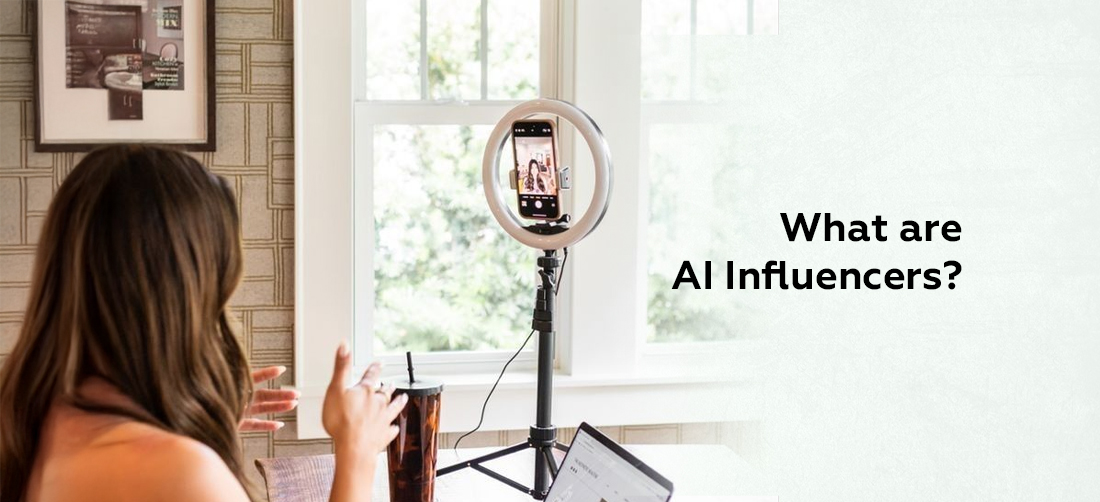

The digital world is evolving fast, and influencer marketing is changing right along with it. One of the most exciting developments in recent years is the rise of the AI influencer. These are not typical human content creators. Instead, they are imagined, created, and animated by artificial intelligence technology. AI influencers are entities/personalities that exist only in the digital space, unlike human influencers, who are real people. Despite this, they have large followings, they're able to shape trends, and now also work with major brands globally. This blog will take you exploring the world of this new-age marketing tool and explain what AI influencers are. How they work and why they are, maybe a key part of your future marketing strategies.
What Are AI Influencers?
An AI influencer is a virtual personality or AI avatar created with a combination of artificial intelligence, computer-generated imagery (CGI), and 3D modelling tools. It's a kind of celebrity born out of code rather than birth. They're only digital personas, but on their social profiles, they behave like real people. They regularly post on their grid - photos, videos and other formats, they interact with their followers in comments and replies just like their human counterparts. They're not real humans, but their makers design them to mimic human behaviour and emotional responses that feel authentic to their audience.
Because they are computer-generated, AI influencers can be styled, scripted, and managed precisely by their creators. They can be hyper-realistic or stylised characters, depending on the strategy behind their launch. Some of these influencers have been developed with detailed backstories and histories; they are given personal interests and a consistent personality that feels human, which improves their reliability.
On social platforms like Instagram, AI influencers are built with such details that they look, act and feel, just like a human -humansmes even making it harder to differentiate that they're computer-generated. This has worked out for them, as many have gathered followers through secure partnerships with high-profile global brands that rival human influencers.
Types of AI Influencers
AI influencers come in several forms, each with its own purpose and appeal:
- Virtual Influencers: These are fully computer-generated and exist completely online. They might have sent entirely animated or photorealistic images, and they interact like real influencers. Accounts like Lil Miquela and others made using AI influencer generator tools are classic examples.
- AI Avatars: These can be customised digital avatars that represent a brand or personality. Think of them as a celebrity brand ambassador, but rather than a suitable personality & budget match, brands just create a virtual human that represents them best and makes it big. They have the potential to accompany or replace human hosts in campaigns. These avatars are typically created using facial-generation tools combined with AI scripting.
- Virtual Models: AI influencers are used primarily in fashion, modelling, and lifestyle content - as these are visual industries. They look like professional models but exist only digitally. Examples include Shudu Gram and Aitana López, both recognised as AI-generated virtual models versus human models.
- Hybrid AI Influencers: These are accounts that both human and AI inputs and tools to generate content. They may use AI-generated character or text assets, but the creative direction, voice or design visuals are human and brand-driven.
How Do AI Influencers Work?
The heart of AI influencers is blending artificial intelligence tools and creative design seamlessly. People who develop these personas use machine learning models, algorithms that do natural language processing and CGI to visualise how these characters will appear and further interact with the digital world when launched. They often use advanced tools that help them analyse audience behaviour, engagement patterns and cultural cues. Accordingly, they design the content to have maximum impact.
For visuals, makers add convincing and personalised details to a character using 3D modelling and CGI rendering. In some cases, motion capture, facial mapping, and real-time animation are deployed to create realistic gestures and expressions.
When it comes to engagement, AI influencers can respond to comments, craft posts, and even host interactive sessions. In most setups, a human team still oversees content planning and ethical guidelines to ensure brand alignment and compliance with platform policies. Yet AI tools increasingly enable the automation of these responses, making AI influencers able to appear "always on" and active, unlike human creators.
Benefits of AI Influencers
AI influencers offer several advantages for brands that are exploring new and efficient ways to connect with audiences.
- Control Over Messaging: Because AI influencers are programmed, brands have greater control over how they speak, what they wear, and how they behave online. This decreases the reputational risks sometimes associated with human influencers.
- 24/7 Content Creation: A very useful feature for the global brands that have ongoing campaigns across various time zones. Since AI influencers never need breaks or vacations, campaigns can be active around the clock.
- Cost Efficiency: Over time, maintaining an AI influencer can be more cost-effective than ongoing payments to high-tier humans. You may need a team to create on an ongoing basis or maintain one. The recurring expenses, such as travel, food, other reimbursements, HMU or manager inclusion in travel, etc., are reduced.
- Creative Flexibility: AI influencers can seamlessly exist in any environment a brand imagines. They can attend virtual events, star in digital fashion shows, or appear in VR and AR spaces. This opens the door for a brand to invest in immersive campaigns that human creators might be too real for.
- Scalability: AI personas can be cloned, adapted into variants, or deployed across multiple accounts and platforms simultaneously. This means brands can scale campaigns faster and with consistent aesthetics.
Drawbacks of AI Influencers
Despite their advantages, AI influencers are not without limitations.
- Authenticity Concerns: One of the biggest challenges with AI influencers is authenticity. Some audiences find digital personalities less trustworthy because they are not real people. This scepticism can dull emotional connection.
- Ethical and Regulatory Issues: AI influencer campaigns must comply with platform guidelines and advertising laws. Misleading followers, faking a digital persona to be a real one, can lead to trust issues or regulatory audits and scrutiny, especially on platforms like Instagram. Any mispractice might result in the account being blocked or deleted.
- Creativity Constraints: While AI can generate content quickly, it still relies heavily on human creative direction, such as the kind of prompt engineered or how the AI model is being trained. The risk is that purely AI-generated content may lack the genuine nuance and cultural context that human creators naturally bring.
- Market Saturation: As more brands adopt AI influencers, it loses its uniqueness and fascination that it once had. It becomes harder to stand out. When several virtual influencers adopt similar styles or voices, differentiation becomes challenging.
Examples of AI Influencers
AI influencers have developed across fashion, lifestyle, entertainment, and brand marketing. Some of the best-known examples show how virtual personas can build audiences, create content, and work with real brands
| AI Influencer | Niche | What Makes Them Notable |
|---|---|---|
| Lil Miquela | Fashion, music & lifestyle | One of the most recognized virtual influencers, known for brand collaborations, music, and a carefully developed digital personality. |
| Lu do Magalu | Retail & lifestyle | A virtual character created for Brazilian retailer Magazine Luiza, showing how brands can use a digital persona as an ongoing marketing and communication channel. |
| Aitana López | Fashion, fitness & lifestyle | An AI-generated influencer created by The Clueless agency that demonstrates how virtual models can be used for social content and brand partnerships. |
| Imma | Fashion & culture | A Japanese virtual model recognized for her distinctive pink hair and fashion-focused digital presence and brand collaborations. |
| Noonoouri | Fashion & activism | A stylized digital character known for combining fashion content with cultural and social themes. |
| Shudu | Fashion & beauty | A digital supermodel known for highly realistic visuals and collaborations within the fashion and beauty industries. |
| Rozy | Lifestyle & fashion | A South Korean virtual influencer used in lifestyle and commercial campaigns, demonstrating the growing role of digital personalities in brand marketing. |
| Milla Sofia | Fashion & lifestyle | A newer AI-generated virtual influencer example that demonstrates how photorealistic digital personas are being used to build social media audiences. |
How Brands Use AI Influencers
Brands embracing AI influencers often do so as part of broader influencer marketing and AI strategies. They tend to collaborate with AI influencers on Instagram and other social media platforms when there's a new drop or a product launch to drive awareness. Some AI influencers like Lil Miquela have millions of followers that directly compete with not just human influencers but celebrities as well when it comes to followership and engagement.
As these digital personas can be created to adapt to a certain niche and deliver a consistent image, they usually act like digital ambassadors for the brand campaigns, without spending on travel or shooting! Their collaboration is promoted and fuelled on social media platforms in the form of feed posts, stories, reels or in hybrid campaigns blending real-world and virtual-world elements using VR/AR.
In India, the AI influencers trend is on the evident rise, with profiles like Kyra, who is recognised as one of the country's first notable virtual Instagram personalities, having partnered with big brands like Amazon Prime Video and boAt.
When to Choose an AI Influencer
Choosing an AI influencer makes sense when a brand wants consistent messaging, scalability, and creative control. Here are some scenarios where AI influencers could be particularly effective:
- When targeting tech-savvy audiences that engage with digital trends, these people are usually first adopters, so they're enthusiastic about something that's primarily a tech trend.
- For campaigns that require a 24/7 online presence or a global reach of the campaign across various time zones.
- When a brand needs strong control over the image and messaging that goes out, as well as the scheduling of the published material.
- In highly visually driven sectors like fashion, gaming, or beauty, virtual models perform well.
However, if authenticity and deep personal connection are key campaign goals, combining AI influencers with human creators often yields better results.
Conclusion
AI influencers are a rapidly evolving force in the world of digital marketing. As virtual models and AI avatars become more lifelike and socially accepted, they offer brands a fresh way to engage with their audiences while reducing some of the risks and costs associated with real human influencers. While it comes with its own challenges, especially around authenticity and ethics, the potential of AI influencers to transform influencer marketing is clear and bright. Brands that explore this space thoughtfully in 2026 and beyond will be best positioned to stand out in a crowded digital environment.
An AI influencer is a digitally created entity and personality designed using artificial intelligence, 3D modelling, and CGI. They don't exist in real life but live completely digital, and operate on social media platforms like Instagram by posting content, engaging with followers, and collaborating with brands. These virtual influencers are programmed by their makers to behave like real people and often have been given a defined personality, visual style, and content theme.
To create an AI influencer, brands typically use tools that have capabilities to generate AI characters or work with creative studios that specialise in AI avatars and virtual models. The process of creating an AI influencer for a brand usually involves the brand defining a few things, such as the character's personality, visual appearance, tone of voice, and content strategy. Some brands choose to manage the influencer in-house using AI tools, while others partner with marketing agencies that handle everything from design to content publishing and campaign management.
Yes, AI influencers are allowed on Instagram as long as they follow the platform's community guidelines and advertising policies. Instagram requires transparency, especially for branded content, which means sponsored posts must be clearly disclosed. Many AI influencer Instagram accounts openly mention that they are virtual or AI-generated to maintain trust with their audience.
AI influencers offer several benefits for brands. They provide complete control over messaging, appearance, and posting schedules. They don't need a break, meaning they can create content around the clock, adapt quickly to the campaign needs and learning, and reduce overheads associated with human influencers. AI influencers are also highly flexible, allowing brands to experiment with creative storytelling, virtual environments, and futuristic concepts that may not be possible with traditional influencer marketing.
AI influencers can perform very well, sometimes better, in terms of reach, engagement, and brand recall, especially for awareness-driven campaigns. However, their performance depends on the campaign goal. For product discovery, tech-enthusiastic audiences, and visual storytelling, AI influencers often match or exceed expectations. For campaigns that rely heavily on personal trust or lived experiences, human influencers may still have an edge. Many brands now use a mix of both to get the best results.
Related Posts
Top 10 Best Instagram Influencers India 2026
Explore the top 10 best Instagram influencers in India 2026 who are setting new trends in fashion, lifestyle, travel, fitness, and entertainment. Stay inspired by India’s most popular creators!
Top 10 Social Media Influencers in India
Explore the top 10 social media influencers in India who are shaping trends, inspiring millions, and dominating platforms like Instagram, YouTube, and more in 2026.
Top 10 Fitness Influencers in India
Explore the top 10 fitness influencers in India known for motivating fitness content, expert training tips, and inspiring health transformations.
Top 10 Travel Influencers in India
Explore the top 10 travel influencers in India inspiring travelers with stunning visuals, hidden gems, and practical travel advice.
Top 10 Indian AI Influencers on Instagram to Follow in 2026
Explore the top 10 Indian AI influencers on Instagram who are redefining content creation with AI-generated visuals, virtual personalities, and tech innovation.