

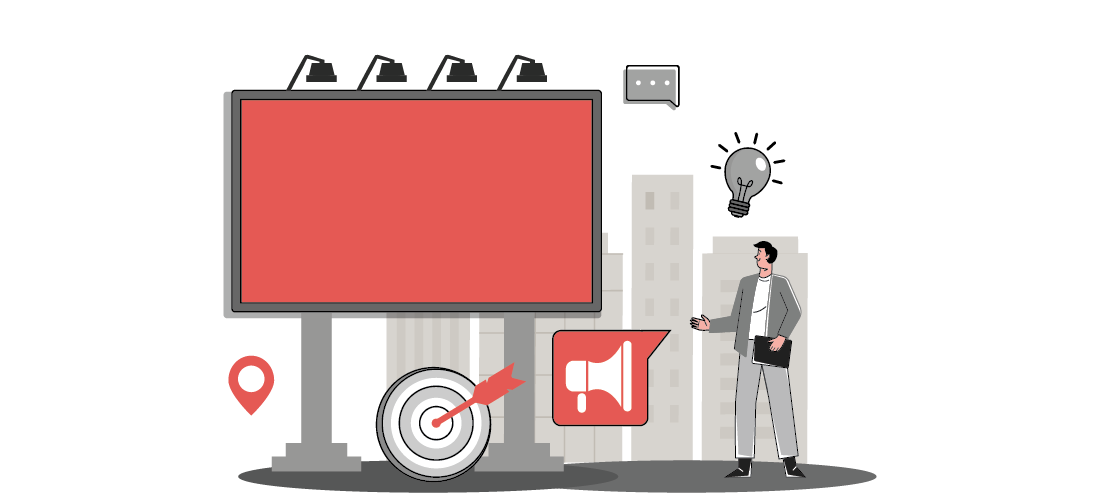

You're stuck in traffic, staring at the same shop signs you see every day, and then suddenly a massive, brilliantly colored hoarding catches your eye. You're not sure how long you stared, but it made you smile or maybe curious enough to search for the brand later that night. This is what hoarding advertising does best. It takes something as routine as a traffic jam and turns it into an opportunity for a brand to stay top of mind.
In a media landscape where ads come and go faster than a scroll, hoarding advertising holds its ground. It is the marketing equivalent of standing tall and saying "look at me." For brands trying to cut through the noise of feeds and notifications, it is not just about visibility. It is about being seen at the right place, at the right time, by the right people.
This guide covers what hoarding advertising actually means, the types available, why brands keep investing in it, what it costs in a market like Mumbai, and real examples you can learn from.
What is Hoarding Advertising?

Hoarding advertising refers to those giant, static or digital displays you see in bustling cities, along highways, or wrapped around construction sites. These large-format displays are built to dominate the space they occupy. This is the advertising hoarding, meaning that it sets it apart from smaller outdoor formats like posters or bus shelter panels.
Hoarding advertising in India remains one of the oldest and most effective ways to capture attention and build a lasting brand presence. While digital platforms have become the default for many marketers, advertising through hoardings offers a physical, real-world presence that a phone screen simply cannot replicate. A hoarding gives brands a canvas for creativity and storytelling, delivering a message that lingers in a viewer's mind long after they have driven or walked past it.
Out-of-home advertising as a category has stayed resilient even as digital ad spend has grown. India's digital out-of-home segment alone was estimated at around ₹1,000 crore in 2025 and is growing at roughly 25 to 30 percent a year, a sign that brands are not abandoning outdoor; they are modernizing it.
What Are Hoardings Used For?

The obvious answer is "to advertise," but the purpose runs deeper than that. Here is what hoardings actually do for a brand:
- Build brand awareness: Hoardings introduce and reinforce a brand's presence across a cityscape. Done right, they do not just announce a product; they embed a brand's identity in the minds of people who pass by every single day.
- Drive sales and promotions: Launching a new product or running a limited-time offer? Hoarding advertising puts your message in front of thousands of people, acting as a giant reminder in a world where people are overloaded with digital information.
- Enhance location-based marketing: A hoarding placed near your store or business location acts as a directional cue, guiding foot traffic straight to your doorstep.
- Reinforce multi-channel campaigns: Paired with digital, social, and in-store marketing, a hoarding adds another layer of presence. Seeing a brand online and then on a giant hoarding builds familiarity and trust faster than either channel alone.
Types of Hoarding Advertising

Hoarding advertising is not a one-size-fits-all approach. Here are the main formats, each with its own strategic strength.
Classic Billboard Advertising
The backbone of outdoor advertising, classic billboards are static, large-scale displays positioned in high-traffic areas. Built for maximum exposure and long-term visibility, their effectiveness lies in simplicity: a bold image, a catchy line, and just enough intrigue to stick in someone's mind.
Digital Display Advertising
Digital hoardings add flexibility and dynamism. These electronic screens can switch between multiple ads, show video, and respond to real-time triggers like weather or time of day. They work especially well in areas with heavy footfall or slow-moving traffic, such as city centers and airports, where viewers have a few extra seconds to engage.
Mobile Advertising Billboards
Instead of staying in one spot, these hoardings are mounted on trucks or vans that move through different areas. This mobility lets brands cover multiple locations and reach varied audiences in a single day, making it a flexible option for campaigns with a broad reach goal.
Building Wall Advertising (Wallscapes)
Some brands go a step further and turn entire building facades into hoarding space. Wallscapes can be striking, transforming a mundane urban structure into a canvas for brand storytelling. They work particularly well in dense city environments with large vertical surfaces available.
Construction Hoarding Advertising
Construction sites, often seen as eyesores, offer a unique hoarding opportunity. Covering temporary fencing with brand messaging improves the look of the area while tapping into the high visibility these spots naturally get, especially in busy commercial or residential zones.
Backlit and Frontlit Hoardings
Illuminated hoardings are built specifically for round-the-clock visibility. Backlit hoardings use internal lighting so the ad glows evenly from within, which works well after dark. Frontlit hoardings are lit externally, highlighting the surface of the ad rather than shining through it. Both formats keep a hoarding eye-catching whether it is noon or midnight, which matters a great deal on highways and busy junctions where traffic never really stops.
How Hoarding Advertising Fits Into Modern Marketing
Hoarding advertising is old, but it has not stood still. Modern campaigns are planned with data rather than guesswork, and the best ones are built to work alongside digital channels instead of competing with them.
- Strategic location planning now factors in traffic density, vehicle speed, dwell time, pedestrian footfall, and sightlines. A well-placed hoarding on the right stretch of road can generate thousands, sometimes lakhs, of impressions in a single day.
- Message simplicity matters more than ever because people glance at hoardings for a few seconds at most. The strongest hoarding creatives communicate one clear idea, not three offers stacked on top of each other.
- Digital integration is where hoarding advertising has changed the most. QR codes, short URLs, and app download prompts on a hoarding let a brand pull a passerby from the street straight into an online journey, reinforcing recall and driving branded search at the same time. This offline-to-online bridge is exactly why hoarding advertising still earns a place in omnichannel media plans.
Advantages of Hoarding Advertising
Hoarding advertising advantages go well beyond "big ads on walls." Here is why brands keep investing in this format.
High Visibility in Prime Locations
Hoarding advertising sits in places where thousands, sometimes millions, of people pass every single day. Whether it is a busy highway, a shopping district, or a public transit hub, the location alone guarantees exposure.
Effective Brand Promotion
A well-designed hoarding can make a brand unforgettable. Unlike digital ads that people can skip or block, hoardings stay in place and deliver the same message, day after day, without an ad blocker in sight.
Strategic Audience Targeting
Choosing the right location lets a brand reach its desired audience with precision. A premium watch brand might target upscale shopping streets, while a fintech brand could focus on business districts and commuter corridors.
Continuous Exposure Day and Night
Hoarding advertising works 24 hours a day, seven days a week. Lit displays keep the message visible even after sunset, making hoardings a genuinely round-the-clock advertising solution.
Enhanced Creative Flexibility
The large format gives brands a creative playground. Bold colors, striking images, and minimal text combine to create high-impact visuals that tell a story in an instant.
Factors to Consider Before Choosing Hoarding Advertising
Before committing budget to a hoarding campaign, it is worth evaluating a few things upfront:
- Audience relevance: Does the location actually put your message in front of your target customer, or just in front of a lot of people?
- Message clarity: Hoardings are not the medium for anything that needs explaining. If your message needs more than a glance to understand, it needs to be simplified first.
- Campaign duration: Short bursts work for launches and promotions. Longer runs of three to six months build the kind of recall that sustains a brand.
- Budget versus expected reach: Compare the cost per location against realistic daily impressions before locking in a spot.
- Compliance and permissions: Hoarding installations require local municipal approvals, and this varies by city and even by ward, so factor in lead time.
Getting these right before you book a site saves both money and a redo down the line.
Steps to Create Hoarding Graphics That Work

Hoarding advertising needs to be more than just large; it needs to be effective. Here is a straightforward approach to designing hoarding graphics that actually work:
- Clarify your message: Define exactly what you want to say, whether that is brand awareness, a product launch, or a special promotion.
- Prioritize visual impact: Use bold colors, large fonts, and high-quality visuals that register in a couple of seconds.
- Keep text minimal: The best hoarding advertising says more with less. Short, punchy lines and generous white space go a long way.
- Include a clear call to action: A website, a phone number, or a simple tagline, whatever it is, make sure it is easy to spot at a glance.
- Tailor the design to the location: Think about the surrounding environment. Will your ad stand out against the backdrop or blend into it?
- Test before finalizing: What looks striking in a designer's studio does not always translate outdoors. Get feedback on the actual scale before you commit to print.
Hoarding Advertising Examples

To understand what strong hoarding advertising looks like in practice, a few standout examples help.
- Manyavar leans on hoardings that feature celebrities and models in traditional Indian attire, keeping the focus on family, heritage, and festive occasions, which lines up naturally with how the brand is positioned.
- Tanishq uses hoardings to showcase new jewellery collections, often with a celebrity face and a design language built around elegance, timed closely to wedding and festive seasons when purchase intent is highest.
- Asian Paints is known for creative, colorful hoardings that lean on puns and wordplay, turning a category that could easily be dull into something people actually notice and remember.
Local businesses in Mumbai, from real estate developers announcing a new project to restaurants marking a grand opening, use hoarding advertising to capture attention in one of India's most competitive advertising markets.
Conclusion: Time to Step Into the Spotlight
Hoarding advertising is about placing your brand front and center in a world full of distractions. Whether you are a startup looking for visibility or an established brand reinforcing your message, hoarding advertising offers a bold, physical way to connect with your audience that a scrollable feed cannot match.
Want to make your mark in the city? As a leading advertising agency, Excellent Publicity can help you design and execute hoarding advertising campaigns that get noticed, remembered, and talked about. Explore our outdoor advertising solutions or get in touch to plan your next campaign.
FAQs
Hoarding advertisements usually run from one month up to a year or more. Shorter campaigns work well for promotions or product launches, while longer bookings help build sustained brand recall. Choose the duration based on your budget and what the campaign is meant to achieve.
Hoarding sizes vary widely, from smaller displays around 10x20 feet to massive ones over 40x60 feet. The right size depends on the location and available space. Bigger hoardings pull more attention, but smaller ones can still work well in tighter urban spots.
Track changes in sales, ask customers how they heard about you, and monitor website visits or branded search volume during the campaign window. Surveys and foot traffic counts near the hoarding location also help you gauge real-world impact.
The two are closely related but not identical. Hoardings are usually larger, placed in busy outdoor spaces along roads, and often used at construction sites or major junctions. Billboards can be smaller and are sometimes mounted on buildings or inside malls. Hoardings prioritize maximum visibility, while billboards can be used to target more specific, localized audiences.
Hoardings are typically made from durable materials like vinyl or PVC sheets stretched over metal frames. These materials hold up against weather and keep the print sharp for months, so your message stays bright and legible to passersby.
Real estate, FMCG, automotive, retail, education, entertainment, and financial services see some of the strongest results from hoarding advertising, largely because these industries rely on mass visibility and repeated exposure to influence buying decisions.
Related Posts

Top 10 Advantages of Radio Advertising for Local and National Brands
Radio is an absolute power for businesses as it remains, even to this day, offering advantages of radio ads that are not easily matched by other forms of media.
What Are The Advantages Of Advertising
The power of advertising is felt in the promotion of products, services, and brands. It is a way through which companies are capable of contacting their targeted consumers, delivering value, and creating a memory imprint in the minds of people across the globe. The advantages of advertising are endless, from visibility to loyalty to image credit. An advertising campaign works like magic in terms of influencing consumers' decisions, providing brand separation, and thereby facilitating the growth of the concerned entity. In this age of competition, the importance of advertising has stood tall as the lifeblood for its very existence and development. Be it traditional advertising or new-age digital platforms, the universally accepted yardstick for creating awareness, boosting sales, and long-run profitability is advertising.
Advantages and Disadvantages of Advertising
Explore the key pros and cons of advertising, including its impact on brand growth, consumer behavior, market competition, ROI, and ethical concerns.