


Businesses have grown to different levels these days. The traditional marketing's old basic techniques are not widely used; instead, today people are more into the ATL and BTL marketing practices. Both these techniques are entirely different and have different use cases. From the blog, you will learn about the strategies for both ATL and BTL marketing and how to use them in different marketing campaigns.
What is ATL Marketing?
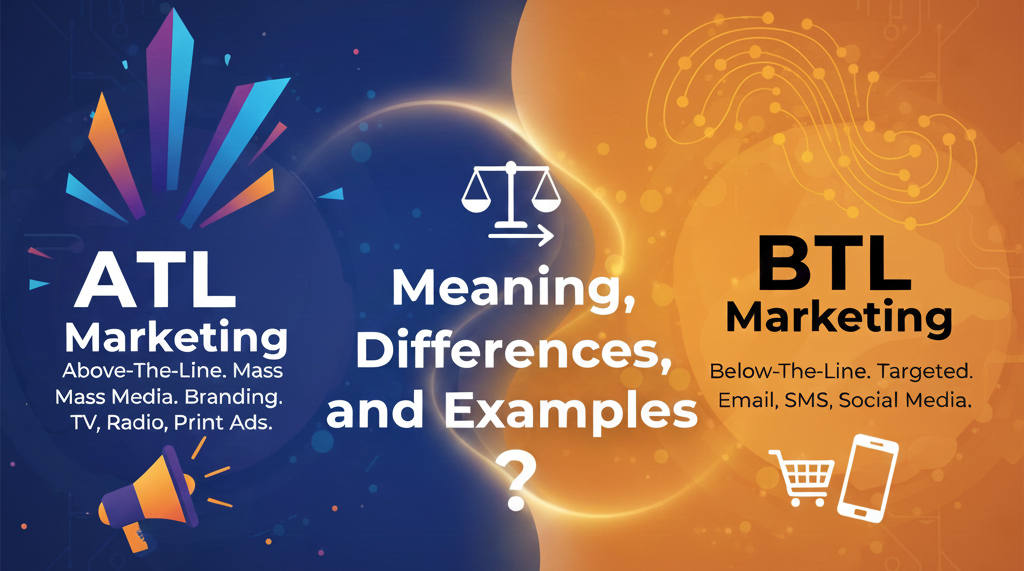
ATL (Above The Line) marketing refers to promotional activities that target a mass audience through traditional media channels. The primary goal of ATL marketing is brand awareness rather than promoting sales.
Characteristics of ATL Marketing:
- ATL marketing reaches a broader, more diverse audience.
- The primary intent of this marketing approach is to increase brand visibility and recall.
- Uses the non-targeted mass communication channels.
- The marketing approach reaches a broad audience, but personalization is not very well included.
Some common ATL marketing challenges include radio commercials, television advertisements, outdoor advertising (e.g., billboards), and newspaper and magazine advertisements. ATL is a more traditional approach that targets a broader audience and is practical for new products or for increasing brand awareness.
What is BTL Marketing?
BTL (Below The Line) marketing is an approach that focuses on direct, targeted communication for a specific audience. BTL marketing leads to immediate action, such as purchases and inquiries.
Characteristics of BTl Marketing:
- The marketing methods are highly targeted and personalized.
- BTL gives prime attention to the measurable results.
- BTL marketing techniques are less costly than the ATL marketing approach.
- The marketing approach focuses primarily on direct consumer engagement.
The common BTL marketing approach would include email marketing, social media advertising focused on a specific audience, SMS and WhatsApp campaigns, in-store promotions, and influencer marketing.
Above-the-line and below-the-line marketing differ in intent and reach. When used together, ATL and BTL activities can positively impact brand growth.
Key Differences Between ATL and BTL Marketing
The brands must understand the difference between ATL and BTL marketing so that they can use both practices wisely:
Target Audience
ATL Marketing: Targets a mass audience.
BTL Marketing: Targets specific audiences.
Objective of the Marketing Strategies
ATL Marketing: The primary reason is brand awareness.
BTL Marketing: The primary reason for this strategy is lead generation and sales.
Cost Factor
ATL Marketing: ATL spends more funds because it targets a broader audience.
BTL Marketing: BTL spends are comparatively low compared to ATL, as it is for a specific audience.
Personalization
ATL Marketing: The ATL marketing technique involves low personalized content.
BTL Marketing: The BTL marketing technique involves highly personalized content for a targeted audience.
Engagement
ATL Marketing: ATL is a one-way communication marketing technique.
BTL Marketing: BTL is a two-way interaction marketing technique.
Examples of ATL and BTL Marketing
Some examples of ATL Marketing include:
- The full-page newspaper advertisements during festival times.
- Highway hoardings promoting a product.
- The radio jingles played across different areas.
Some Examples of BTL Marketing include:
- Personalized email written for specific loyal consumers.
- Product sampling in crowded places like malls and supermarkets.
- Targeted Instagram advertisements for a targeted group of audience.
These ATL and BTL advertising techniques involve how the brands interact with the audience through visuals and audio.
The Rise of TTL (Through the Line) Marketing
TTL (Through the Line) marketing combines the strengths of ATL and BTL marketing strategies. With a plan to bridge the gap between mass communication and personalization, the TTL marketing strategy has gained significant popularity.
Why is TTL used widely?
TTL is widely used for mass reach within a targeted audience. These days, brands want awareness and conversions from a single marketing technique. The brands also need measurable ROIs from the campaign they run, along with the reach.
Now, if you take an example of an ad campaign that targets an audience based on their interests, it is neither pure ATL nor BTL marketing. Modern techniques generally combine the best of both methods, known as TTL marketing.
Which is Better: ATL or BTL Marketing?
ATL and BTL marketing techniques have their own merits and demerits. We can analyze the correct answers by understanding the need from the advertisement, considering the audience type, business goals, and the budget.
Choose the ATL marketing service for:
- Strong foot on brand awareness.
- Launching a new product range.
- Targeting a wide audience range.
- You have ample budget to proceed with this marketing technique.
Choose the BTL marketing service for:
- To get some measurable results.
- Targeting a specific niche audience group.
- Higher conversion rates and engagement.
- Your budget is constrained, and you want to use it wisely for your audience group.
But most brands these days don't choose between above-the-line and below-the-line marketing; they combine both and use them strategically across different campaigns.
Explore Excellent Publicity if you want to integrate these marketing techniques in your brand marketing.
Although a cumulative blend of ATL and BTL marketing techniques is necessary, you still need to detail both the above-the-line and below-the-line marketing strategies to implement them within the TTL marketing strategy and achieve the desired results in a limited time frame. Both marketing strategies are essential in their own way and should be used accordingly for different campaigns, with each campaign's needs in mind.